Wrong Strategy, or an Organization Without the Capability to Execute?
Wrong Strategy, or an Organization Without the Capability to Execute?
The strategy is carefully built and the goals are clear, yet a few months later the project is behind schedule, departments are not coordinating, and the CEO is stepping in to fix every small issue. The problem is not the strategy. It is the organization’s capability to execute. Having talented people does not guarantee results. What matters is whether those people can deliver results together.
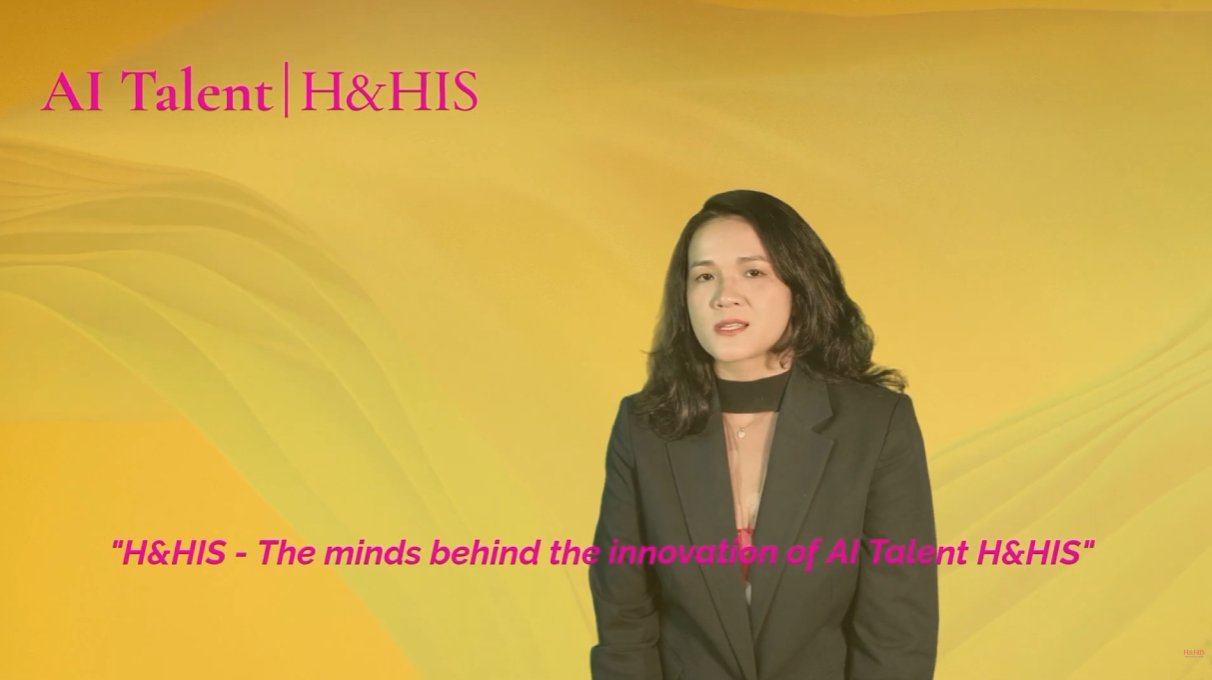
🎥 Watch the AI Talent H&HIS introduction video here.
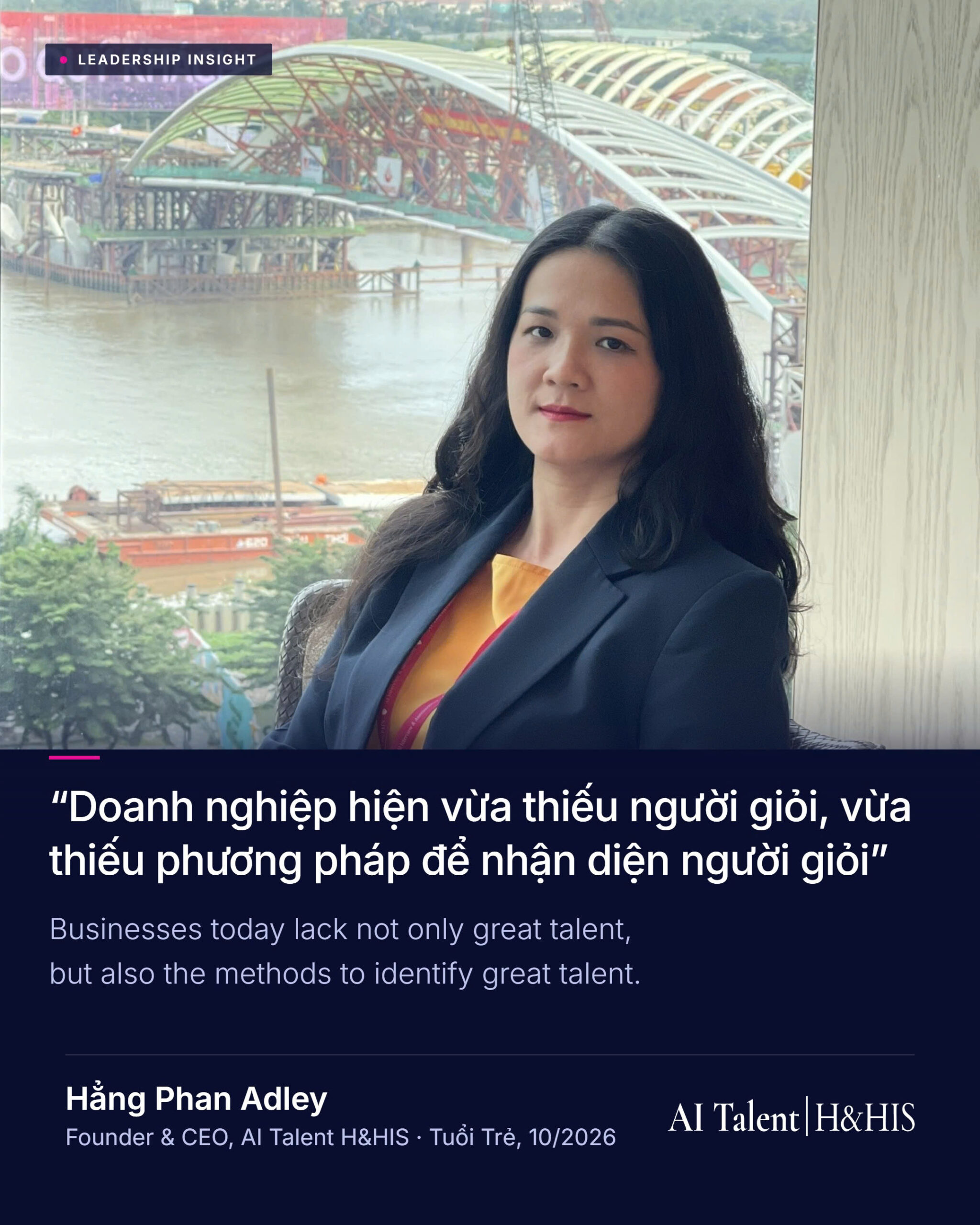
In her previous video, Ms. Hẳng Phan Adley, Founder & CEO of AI Talent H&HIS, explained that strategy fails the moment a business hires the wrong people. In this video, she opens with a situation many leaders and CEOs have lived through, to answer one question: is the strategy wrong, or does the organization lack the capability to execute it? (Based on a talk by CEO & Founder Hẳng Phan Adley on 2 May 2026 – Click to watch)
A Situation Many CEOs Know Well
The company has a carefully crafted strategy. Everything is prepared almost perfectly, and the goals are very specific. Yet a few months later, the project falls behind schedule, departments fail to coordinate smoothly, and operating processes keep breaking down. At this point, the CEO has to step in to resolve every minor issue.
The question is: is our strategy wrong, or does our organization lack the capability to execute it?
Strategy Is Easier Than Ever to Build. Execution Capability Is Not.
We live in a time when strategy can be built easily and quickly. AI helps analyze data at speed, and CEOs can be advised on very attractive implementation roadmaps. But one thing no one can do for you is your organization’s capability to execute.
The key point is that businesses do not lack strategy, nor do they lack talented people. What they lack is a system strong enough to execute the strategy.
A Common Mistake: Looking Only at Individuals
A common mistake is assessing employees through their CVs and as individuals, focusing on finding the very best people. Businesses overlook whether the team coordinates effectively, whether decisions flow smoothly through the system, and whether the team can deliver collective results.
A dangerous misconception is believing that talented people automatically produce good results. Reality often shows the opposite. (A well-known study by Harvard Business School Professor Boris Groysberg, which tracked more than 1,000 star analysts on Wall Street, found that when they moved to a new firm, their performance dropped immediately and stayed lower for at least five years. The decline was most pronounced among those who moved alone, without their teammates. The conclusion: much of a star’s performance comes from the system, team and organizational capabilities around them.)
Example 1: The XX7 Mart Chain, a Sound Idea Without the Capability to Scale
A very familiar example is the XX7 Mart chain. It once had a highly ambitious strategy: build a domestic retail chain, expand quickly through franchising, and leverage the strength of its brand. At the time, its coverage was very strong.
But operations did not go as planned. The system had not been standardized, quality could not be controlled consistently, and the customer experience was uneven. The result was clear: the chain could not expand or grow sustainably as expected. (This is a classic franchising lesson: the pace of expansion must follow the capability to standardize operations. Many successful chains in Vietnam, such as KFC and Lotteria, operated around 100–200 company-owned stores before expanding through franchising, so they could standardize processes, train their people and secure quality control first.)
The lesson: the idea was not wrong or bad. The organization simply did not have the capability to operate at scale.
Example 2: Nissan, Where No One Was Incompetent, Yet the Organization Stopped Working
The second example is Nissan, an organization of hundreds of thousands of people operating across many countries, once regarded as part of one of the world’s most powerful automotive alliances. Then one day, its top leader, Carlos Ghosn, was arrested on allegations related to income reporting and financial misconduct. He was subsequently removed from Nissan and from the Renault alliance. (The arrest took place in Tokyo in November 2018. Mr. Ghosn has consistently denied the allegations.)
From that moment, the organization did not merely lose a leader. It lost control and lost the balance of power within the organization. Mutual suspicion began to surface within the alliance, and unstable decisions started to emerge from the inside. The result was an alliance strained by disputes over control, with leaders who no longer shared the same strategic language. (In 2023, Renault and Nissan had to restructure the alliance and rebalance their cross-shareholdings, something they had never needed to do before.) As a result, important decisions took far longer than before to be agreed and approved. But the market waits for no one: electric vehicles are accelerating, competitors are investing heavily in technology, and everything changes daily.
This case shows that when an organization reacts slowly, its opportunities disappear. The serious problem then no longer lies in the financial statements, but in the fact that the organization no longer operates as a unified system. The consequences: declining performance, falling sales and vanishing profits. In the end, Nissan had to restructure globally, cut costs and scale back its operations. (For the fiscal year ending March 2025, Nissan posted a net loss of ¥670.9 billion, its largest in more than two decades. Its “Re:Nissan” restructuring plan includes cutting around 20,000 jobs, about 15% of its workforce, and closing 7 of its 17 production plants by fiscal year 2027.)
The lesson we most need to reflect on: no one in Nissan’s organization was incompetent, yet the organization was no longer effective. This is what many CEOs overlook: an organization does not collapse for lack of talented people. It collapses when talented people can no longer deliver results together.
The question is not whether a business has talented people, but whether its organizational system stays in sync under pressure. Even a large organization can slow down when its system no longer works in sync.
Execution Is the Coordinating Capability of the Whole System
These two examples show that the problem lies not in strategy but in the organization’s capability to execute it. The key point is that execution is not the effort of one individual. It is the coordinating capability of the entire system.
Yet most businesses still assess individuals in isolation. They celebrate outstanding performers and “stars,” but cannot measure how effectively those people work together. As a result, they may have talented people but not a strong team. (Google’s Project Aristotle, which studied more than 180 internal teams, reached a similar conclusion: who is on a team matters less than how its members interact, structure their work and view their contributions.)
Meanwhile, successful corporations around the world assess not only what individuals can do, but whether they create value within the system. They evaluate individual performance, the ability to collaborate with stakeholders, and leadership capability in real-world contexts. One point deserves real attention: no one is considered a high performer unless they deliver results through others. (For example, after abandoning curve-based stack ranking, Microsoft now evaluates performance on three dimensions: individual impact, contribution to others’ success, and how well people leverage the work of others.)
Execution capability no longer resides in individuals. It lies in how individuals connect, collaborate and coordinate with one another.
The AI Talent H&HIS team sees this as a limitation of many Vietnamese businesses: most see only individuals, not the system. That is why a strategy can be well prepared, yet once execution begins, everything turns into cost.
A Platform That Assesses Capability at the Individual and Team Level
AI Talent H&HIS is more than a smart interviewing platform. It is a system that helps organizations assess capability at both the individual and team level. It helps you to:
– Analyze how a person makes decisions in real situations.
– Measure cross-functional collaboration capability.
– Predict execution effectiveness in high-pressure environments.
As a result, businesses no longer hire on the gut feeling of a few people, and no longer assess candidates in isolation. Most importantly, they build an organization that truly knows how to deliver results.
The One Thing That Cannot Be Copied
In today’s world, strategies can be copied quickly, technology can be bought, and ideas can be learned. But one thing can never be copied: an organization that knows how to turn plans into results. (According to Jay Barney’s Resource-Based View, sustainable competitive advantage comes only from resources that are hard to imitate. An organization’s coordinating capability is exactly such a resource, because it is built from each company’s own people, processes and culture.)
Experts point out that the gap between market leaders and everyone else lies not in what leaders think, but in what they are able to do. (Stanford professors Jeffrey Pfeffer and Robert Sutton call this “The Knowing-Doing Gap”: many companies know exactly what they need to do, yet fail to turn that knowledge into action.)
One final question she puts to leaders, CEOs and HR professionals: does your organization merely own talented people, or does it control how it creates results? Strategy only creates expectations; execution is what creates money.
Contact the AI Talent H&HIS team for guidance on assessing capability at the individual and team level.
Watch the full talk here: Wrong Strategy, or an Organization Without the Capability to Execute? – YouTube
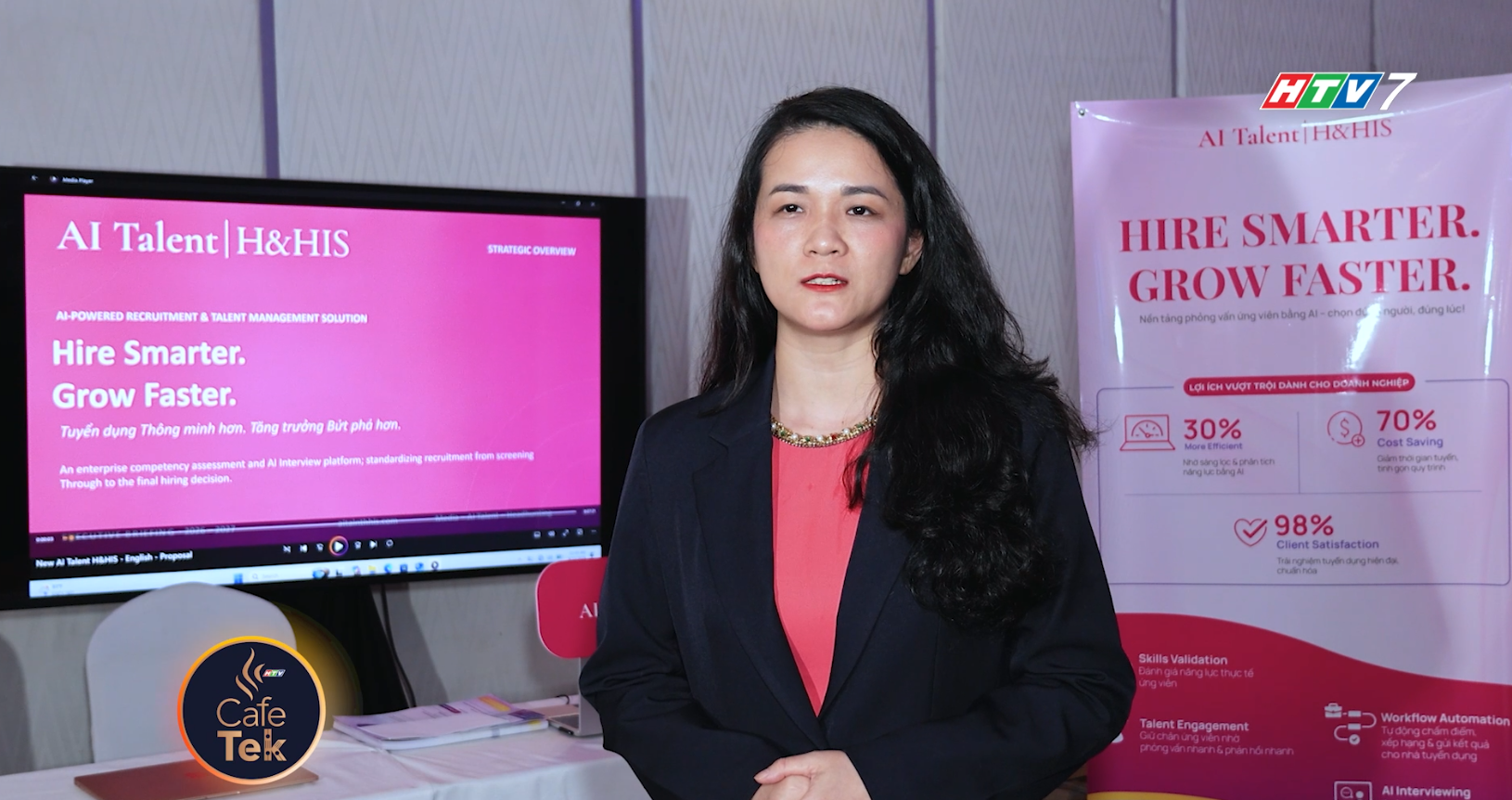
AI Talent H&HIS – Hire Smarter. Grow Faster.
Explore now: https://aitalenthhis.com
Hotline: (+84) 97 360 7502
📩 Sign up for a free trial today and start optimizing your hiring process with AI.
For expert consultation, contact: bd@hinternationalstrategy.com
AI Talent H&HIS, the leading AI-powered interview and skills assessment platform in Vietnam and Southeast Asia.
”H&HIS – The minds behind the innovation of AI Talent H&HIS“