AI Does Not Take Jobs. It Exposes Capability Gaps
AI Does Not Take Jobs. It Exposes Capability Gaps
Artificial intelligence will not take away people’s jobs, but it will certainly take away the advantage of organizations that still manage people the old way. Businesses once competed on products, and later on technology. Today, they compete on how fast they can restructure organizational capability.
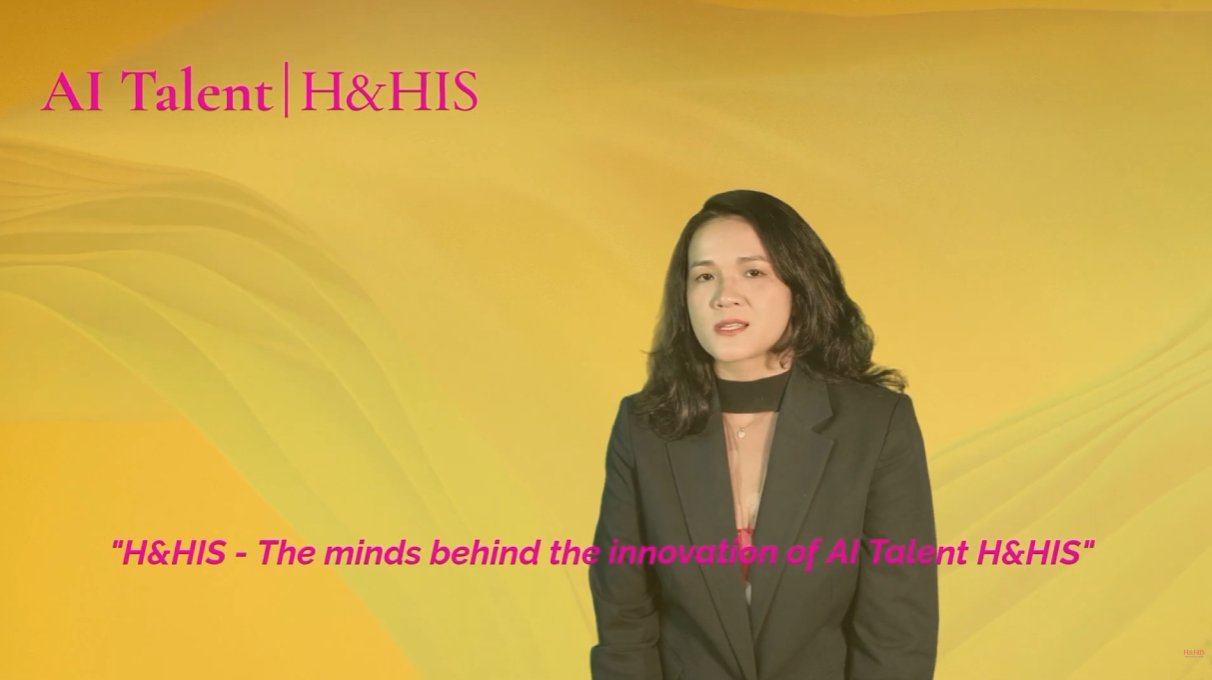
🎥 Watch the AI Talent H&HIS introduction video here.
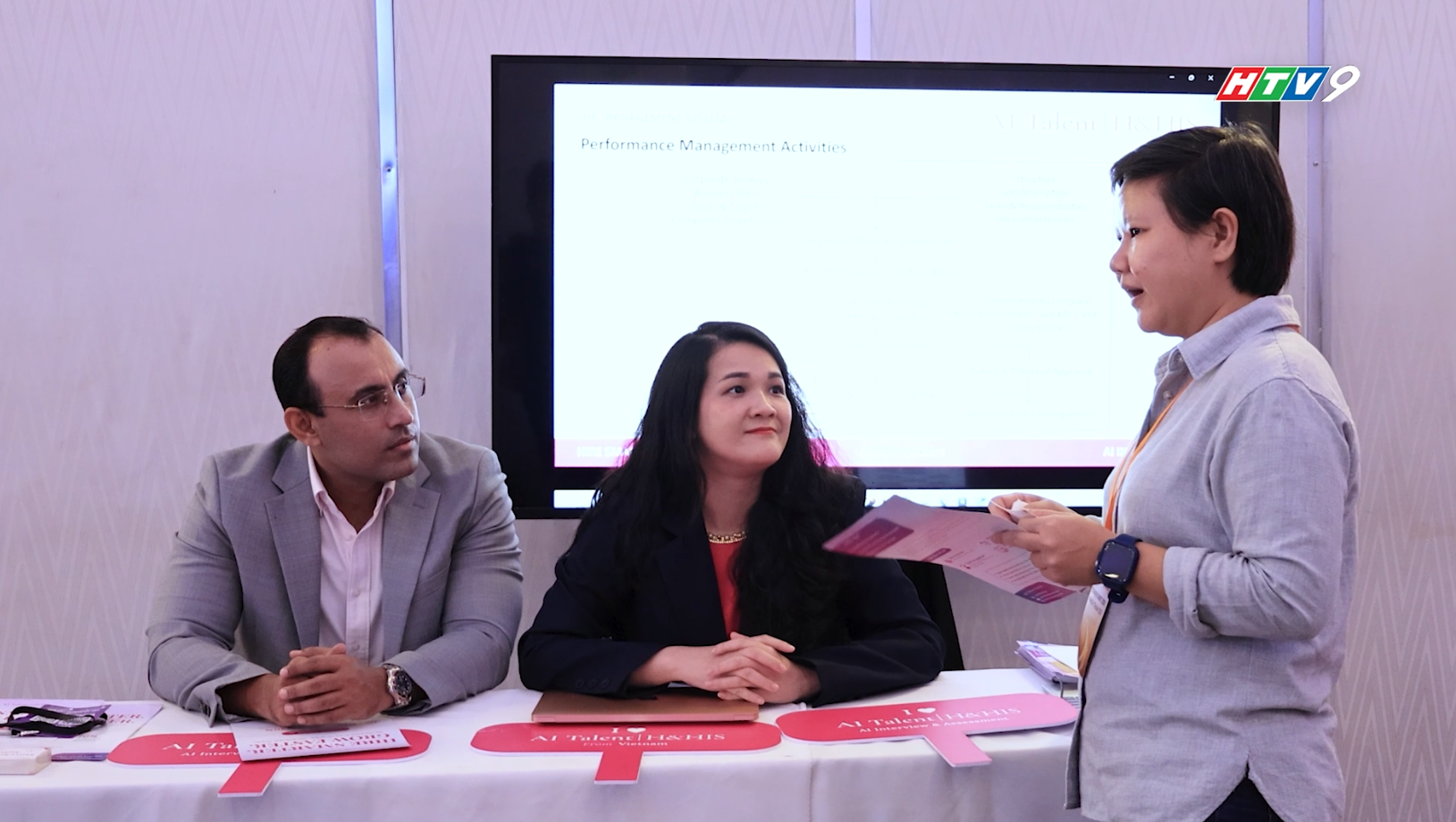
In her previous video, Ms. Hẳng Phan Adley, Founder & CEO of AI Talent H&HIS, explained that businesses are held back not by the market but by team capability that cannot keep pace. In this video, she addresses a defining truth of the AI era: AI does not take jobs, it exposes an organization’s capability gaps. (Based on a talk by CEO & Founder Hẳng Phan Adley on 28 April 2026 – Click to watch)
Competing on the Speed of Capability Restructuring
Artificial intelligence will not take away people’s jobs, but it will certainly strip away much of the advantage held by organizations that still manage people in outdated ways. Businesses once competed on products, and later on technology. Today, they compete on the speed at which they can restructure organizational capability. This is the true essence of talent management.
According to McKinsey, AI and automation are rapidly changing how work gets done and which skills it requires. A role may still exist, but the capability profile used to assess the person in that role has changed. (In its 2025 report “Agents, robots, and us,” McKinsey finds that most human skills will endure but will be applied differently, and that demand for AI fluency in US job postings has grown sevenfold in just two years. The World Economic Forum’s Future of Jobs Report 2025 likewise estimates that on average about 39% of workers’ existing skill sets will be transformed or become outdated between 2025 and 2030.)
Job Descriptions and CVs Only Reflect the Past
The AI Talent H&HIS team observes that most businesses still manage people through job descriptions and rely entirely on candidates’ CVs for assessment and hiring. That is a problem, because these tools mostly reflect the past, while organizations need to make decisions for the future.
Organizations can no longer simply hire, retain and train. They must continuously understand, measure and redeploy organizational capability, which means shifting from managing positions to managing capabilities and skills.
Example 1: Siemens, Seeing Capability in Order to Design the Future
Siemens is one of the corporations moving to a skills-based approach. It applies AI to measure its people’s capabilities and skills, and invests in a competency management system and internal learning platforms. Its goal is not merely to manage people better, but to understand which capabilities the organization has today and which it will need in the future. (Siemens’ “My Learning World” platform, launched in 2020, includes a skills management feature that helps employees identify their own skill gaps and receive personalized learning paths. Siemens also uses AI in recruitment and internal mobility to match people with suitable roles and recommend skills to develop.)
The lesson: if you cannot see capability, you cannot design the future of your organization.
Example 2: GSK, Operating as an Internal Talent Marketplace
GSK is one of the companies moving from department-based people management to an internal talent marketplace, where capability is measured, allocated and redeployed. Its internal marketplace model lets employees join projects outside their own departments and matches people to work by skills rather than job titles, which makes the organization more agile. A growing number of global corporations are adopting this approach. (GSK, a global pharmaceutical company with around 66,000 employees in more than 80 countries, has built an AI-powered skills foundation. The system infers each employee’s skills and recommends personalized learning, opportunities and internal roles. More than 80% of employees have rated their skills on the platform, and GSK has consolidated more than 20 separate learning systems into a single hub.)
The lesson: an organization is no longer a chart of departments. It is a network of capabilities that can be reconfigured.
Example 3: MoMo, Where Continuous Adaptation Is a Condition for Survival
When a business runs on products and data, changing and measuring capability is no longer optional. It is essential. MoMo operates in a product environment that changes very quickly. Every decision must be grounded in data, and competition in the industry is intense. All of this requires MoMo to build a team that can adapt continuously, work cross-functionally and understand the product. For MoMo, this is a requirement for survival. (MoMo now serves more than 30 million users and runs hundreds of AI models every second. Vietnam’s digital payments market is fiercely competitive: according to a VinVentures report, fintech companies have spent hundreds of millions of US dollars on promotions and partnerships to compete with bank QR payments, and some e-wallets, such as Moca, have already exited the market.)
The lesson: when the business model changes, capability must change with it.
Example 4: VNG, Where Organizational Speed Equals the Speed of People Development
An organization can move only as fast as its people develop. VNG operates on a product model: decide fast, execute fast and adjust continuously. VNG’s people must have capabilities that match that pace of change. (VNG is one of Vietnam’s leading technology companies, behind products such as Zalo and ZaloPay. In a product operating model, small cross-functional teams own a product end to end and improve it continuously based on user feedback. This requires autonomy and decision-making capability at every level, not only in management.)
The lesson: no organization can grow quickly if its people still operate the old way.
An Uncomfortable Truth
The AI Talent H&HIS team observes an uncomfortable truth: most businesses cannot measure the real capability of their people and have little idea who truly fits which role. As a result, every decision about people and hiring rests on gut feeling.
Three Shifts for the New Era
Leading organizations worldwide (notably Deloitte, through its “skills-based organization” model) point to three critical shifts businesses must make to survive in the new era:
– First, from personnel administration to data-driven talent management.
– Second, from position-based management to skills- and capability-based management.
– Third, from intuition-based management to intelligent management.
(Deloitte’s survey research finds that organizations taking a skills-based approach are 107% more likely to place talent effectively and 98% more likely to retain high performers than those that have not adopted it.)
A Platform That Decodes Human Capability
AI Talent H&HIS is more than a smart interviewing platform. It is a platform that decodes human capability, helping organizations to:
– See the real capability of each individual clearly.
– Analyze how people create results.
– Determine how well each person fits each role.
The most important thing about the AI era is that AI does not replace people. It turns talent management from guesswork into a system that can be measured with data. Without measuring capability, a business cannot optimize its people, scale its organization, or move fast enough to beat its competitors. If you cannot measure capability, you are managing headcount, not the capabilities that create value.
Questions for Leaders
The question is no longer whether your team is still fit for purpose. The more important question is this: if AI changes how work is done over the next year, is your organization actively upgrading its team’s capability?
Ultimately, AI will not replace people, but it will eliminate organizations that fail to upgrade their capability in time. (This echoes the observation of Harvard Business School Professor Karim Lakhani in Harvard Business Review in 2023: “AI won’t replace humans, but humans with AI will replace humans without AI.” To be precise, AI will displace certain types of work: the WEF Future of Jobs
Report 2025 projects around 92 million jobs displaced by 2030, alongside 170 million new jobs created. The core issue is therefore not how many jobs AI takes, but whether an organization has the capability to move its people into the new work.) Is your team truly developing, or still repeating outdated ways of working?
And one final question she puts to you: is your capability still competitive in the age of AI?
Contact the AI Talent H&HIS team for guidance on measuring your team’s capability and building a data-driven talent management system.
Watch the full talk here: AI Does Not Take Jobs. It Exposes Capability Gaps – YouTube
AI Talent H&HIS – Hire Smarter. Grow Faster.
Explore now: https://aitalenthhis.com
Hotline: (+84) 97 360 7502
📩 Sign up for a free trial today and start optimizing your hiring process with AI.
For expert consultation, contact: bd@hinternationalstrategy.com
AI Talent H&HIS, the leading AI-powered interview and skills assessment platform in Vietnam and Southeast Asia.
”H&HIS – The minds behind the innovation of AI Talent H&HIS“