When Team Capability Fails to Keep Pace, the Business Slows Down
When Team Capability Fails to Keep Pace, the Business Slows Down
Technology is changing at speed, and the way work gets done inside organizations changes every day. Today’s top performer is no longer simply someone who works quickly and accurately. It is someone who understands problems more deeply, learns faster and adapts faster. No organization can move quickly if its team’s capability cannot keep pace with the work.
🎥 Watch the AI Talent H&HIS introduction video here.
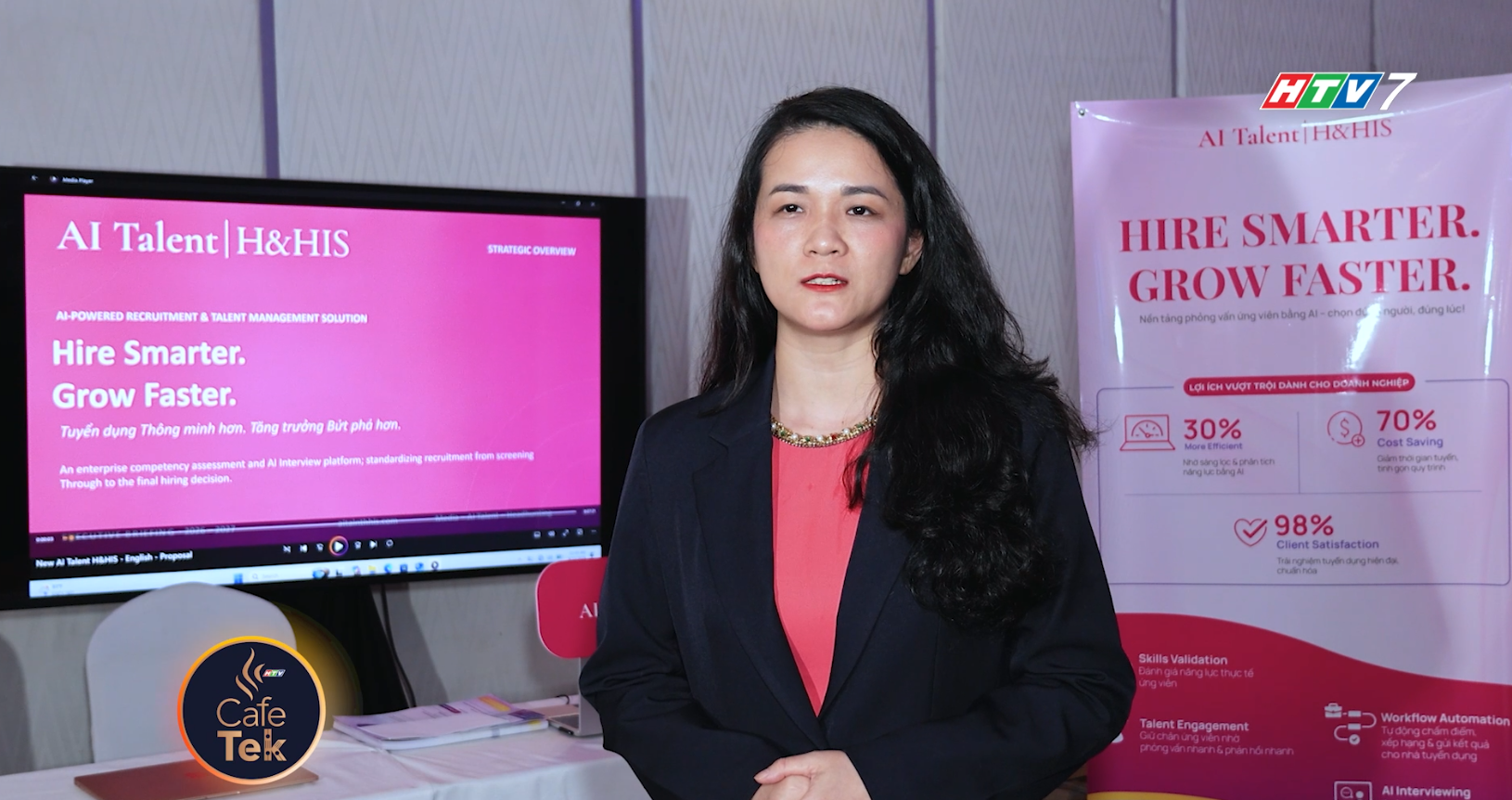
In her previous video, Ms. Hẳng Phan Adley, Founder & CEO of AI Talent H&HIS, explained that a business is limited by its CEO’s capability to design systems. In this video, she turns to an equally pressing issue: an organization slows down when its team’s capability fails to keep pace with change. (Based on a talk by CEO & Founder Hẳng Phan Adley on 25 April 2026 – Click to watch)
The World Has Changed. Has Your Team?
We are living through a period of rapid technological change. Ways of working inside organizations shift daily, and the value each person creates is no longer what it used to be. In Vietnam, businesses are steadily digitizing and moving toward automation, and many jobs are no longer done the old way. As a result, a team’s current capability may no longer fit the work.
According to the World Economic Forum, more than half of the global workforce needs to reskill or upskill to adapt to the new environment. Many jobs have changed significantly over the past decade because of automation. (The WEF Future of Jobs Report 2025 estimates that 59 out of every 100 workers will need reskilling or upskilling by 2030, and that on average 39% of workers’ existing skill sets will be transformed or become outdated between 2025 and 2030. Reskilling means learning entirely new skills for a different role. Upskilling means deepening existing skills to perform better in the current role). The critical question, then, is whether your team is evolving its capability to adapt.
Who Is a Top Performer Now?
A strong employee used to be someone who worked quickly and accurately. Today, much of that work is supported by new tools and automation. So who counts as a top performer now? Someone who understands problems better, learns faster and adapts fastest to new work and new conditions.
In other words, skills alone are no longer enough. The capability to learn and change is now the core differentiator. (Talent science calls this learning agility: the ability to learn rapidly from experience and apply those lessons in unfamiliar situations. Developed by Lombardo and Eichinger in 2000, the construct has been validated by Korn Ferry across thousands of senior executive assessments as the single best predictor of executive success, ahead of intelligence and education.)
Example 1: Microsoft, Transforming the Learning Culture of an Entire Organization
Microsoft’s leader transformed the learning culture of the entire organization and made continuous learning the priority. (After becoming CEO in 2014, Satya Nadella led Microsoft’s shift from a “know-it-all” culture to a “learn-it-all” culture. The shift was grounded in Stanford psychologist Carol Dweck’s growth mindset theory: human capability can be developed through learning rather than being fixed.)
The lesson: organizations succeed not because they know more, but because they learn faster than others.
Example 2: DBS Bank, Learning as Strategy
At DBS Bank, learning is a strategy, not a box-ticking training program. DBS is regarded as one of the world’s leading digital banks. (Euromoney named DBS “World’s Best Digital Bank” in 2016, 2018 and 2021. In 2017 alone, the bank committed SGD 20 million over five years to transform its employees into a digital workforce.) It did not stop at digitization. It also upgraded the capability of its entire workforce. Employees were trained to make data-driven decisions and to work faster and more flexibly. They also had to let go of old ways of working that relied entirely on experience.
The lesson: digital transformation, or any business transformation, does not start with systems. It starts with the capability of the people in the organization. Without that, investment in technology will never pay off. (Technology creates value only when people have the capability to put it to work.)
Example 3: Amazon, Hiring for Adaptability
Amazon is known for the speed at which it changes. It hires not only talented people but people who learn quickly and adapt well. In its environment, today’s skills can become obsolete very quickly. (This ethos is written into one of Amazon’s Leadership Principles: “Learn and Be Curious.”)
The lesson: hiring talented people is not enough. You also need to hire people capable of becoming better in the future.
Example 4: Vietjet Air, Same Job, Different Capability
Vietjet Air is a low-cost carrier, yet its competitive advantage lies not only in price but in how flexibly and efficiently it operates.
Traditional aviation has familiar problems: rigid models, heavy reliance on experience and a great many procedures, all of which slow down every decision. Vietjet Air’s model demands fast operations, continuous optimization and cost reduction down to the smallest detail. This forced the airline to change the capability of its workforce:
– Traditional staff follow procedures and instructions, with little change. At Vietjet Air, staff need a different capability: optimization. They must do things right and also keep finding ways to do them better, cheaper and faster.
– Decisions are based on data and operational reality, not only on experience. Staff must look at flight data, costs and performance.
– Staff must adapt to constant change, since epidemics, scheduling and operations all keep shifting.
The lesson: the job may be the same, but with yesterday’s capabilities you cannot operate a new model. Crucially, the airline could not replace every employee coming from traditional aviation. It had to train its people in a new mindset and a new way of working that fit its model.
The point is not to add more skills, but to change how people create value for the organization. Without reskilling, you can change your systems, your technology and your strategy, and the organization will still run the old way because the people have not changed. In the end, no real transformation takes place.
Example 5: Unilever, Redefining Capability in a Fast-Changing World
Changing how work gets done means more than hiring the right people. It also means changing the capability of the people you already have. Unilever redefined capability for a fast-changing world. It did not change simply to look modern. It had to change because work was evolving so quickly that its old criteria for assessing people no longer applied.
Unilever was one of the pioneers in rethinking recruitment, with online video interviews and candidate analytics. (The model was first applied to graduate and entry-level hiring. Previously, Unilever needed four to six months to screen around 250,000 applications for roughly 800 positions). As a result, it:
– Cut time-to-hire from several months to a few weeks. (Specifically, from about four months to about four weeks, saving more than 50,000 hours of candidate time.)
– Broadened its candidate pool, no longer relying entirely on candidates with impressive backgrounds.
– Increased objectivity in the interview process.
Most importantly, Unilever redefined what it means to be the right fit for the organization. It used to hire on the basis of degrees, schools and experience. It now assesses learning agility, adaptability and growth potential. Past performance no longer guarantees future success: someone who excelled under the old way of working will not necessarily excel in the future. (This marks the shift from hiring on past performance to hiring for potential, a defining trend in modern talent management.)
Once it changed how it assessed capability, Unilever also had to overhaul nearly everything about how it developed people. It could no longer rely on legacy training programs, nor keep its old approach to evaluating and developing talent.
The lesson: if you assess people against outdated criteria, you will hire the wrong people for the future. A wrong hire is costly and delivers little value.
Two Things That Must Happen in Parallel
Vietjet Air shows that you must upgrade the capability of the people already in the organization before you can operate under a new model. Unilever shows that you must change how you select people from the very start. An organization that wants to adapt well to the market needs both. Without either one, it will be unable to change, or it will change slowly and at great cost. (In talent strategy, these are the two pillars of the “Build – Buy” model. Build develops capability from within the existing workforce. Buy brings the right capability in from outside. An organization that relies on only one pillar will be either too slow or too fragile.)
The Reality: Training Becomes a Slogan
The AI Talent H&HIS team observes that most companies today still:
– Do not know which capabilities they need.
– Do not know how to measure their current capabilities.
– Do not know where the capability gaps in their organization lie.
At that point, training becomes a slogan rather than a strategy. The consequence is continuous training with no change in team capability. Or companies keep hiring on outdated criteria while the work and the business context have changed dramatically. The organization fails to adapt and grow despite heavy investment of time, money and effort. (The Kirkpatrick Model evaluates training at four levels: reaction, learning, on-the-job behavior and business results. Many organizations stop at levels 1 and 2, such as training hours and satisfaction scores, and never measure levels 3 and 4. That is why so much training leaves capability unchanged.)
This is no longer a game for the most talented. It is a game for those who learn fast and change fast. To play it, an organization must know its current capabilities and what it needs to invest in developing. Otherwise, every effort to upgrade the team will rest on gut feeling.
A Platform That Decodes Workforce Capability
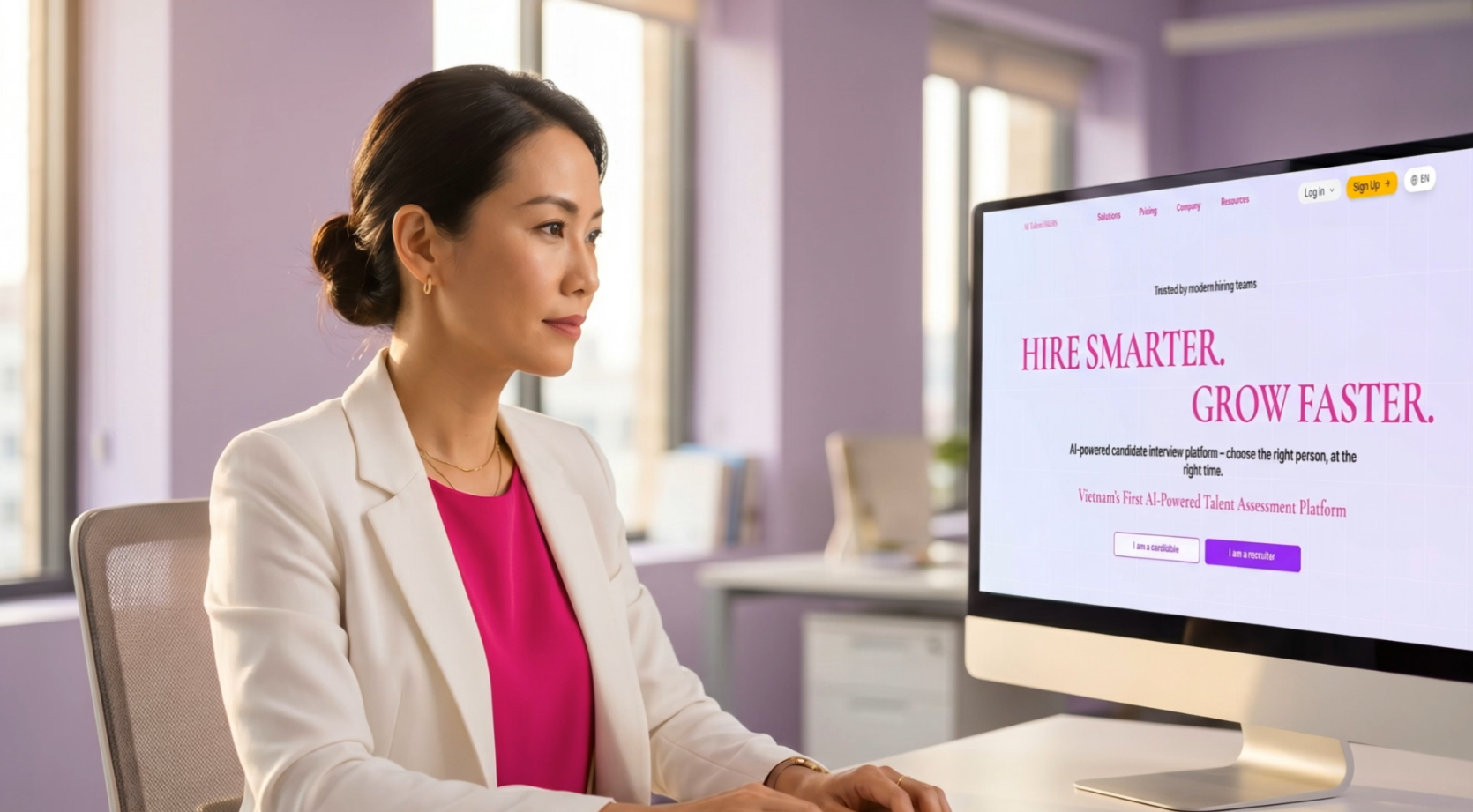
AI Talent H&HIS is more than a smart interviewing platform. It is a platform that decodes workforce capability, helping organizations to:
– See the real capability of their people clearly.
– Determine how well each person fits each role.
– Hire the right people with the right capabilities.
– Assign the right work to the right strengths.
– Accelerate the organization on the basis of real capability.
What cannot be measured cannot be developed sustainably, and you cannot grow fast if you cannot measure the capability of your organization.
Is your organization truly upgrading its team’s capability, or just running training for the sake of it and repeating old ways? She closes with a question for leaders and HR professionals: if the work changes over the next one to two years, will your team keep up?
Contact the AI Talent H&HIS team for guidance on measuring your team’s capability and building the right upskilling roadmap.
Watch the full talk here: When Team Capability Fails to Keep Pace, the Business Slows Down – YouTube
AI Talent H&HIS – Hire Smarter. Grow Faster.
Explore now: https://aitalenthhis.com
Hotline: (+84) 97 360 7502
📩 Sign up for a free trial today and start optimizing your hiring process with AI.
For expert consultation, contact: bd@hinternationalstrategy.com
AI Talent H&HIS, the leading AI-powered interview and skills assessment platform in Vietnam and Southeast Asia.
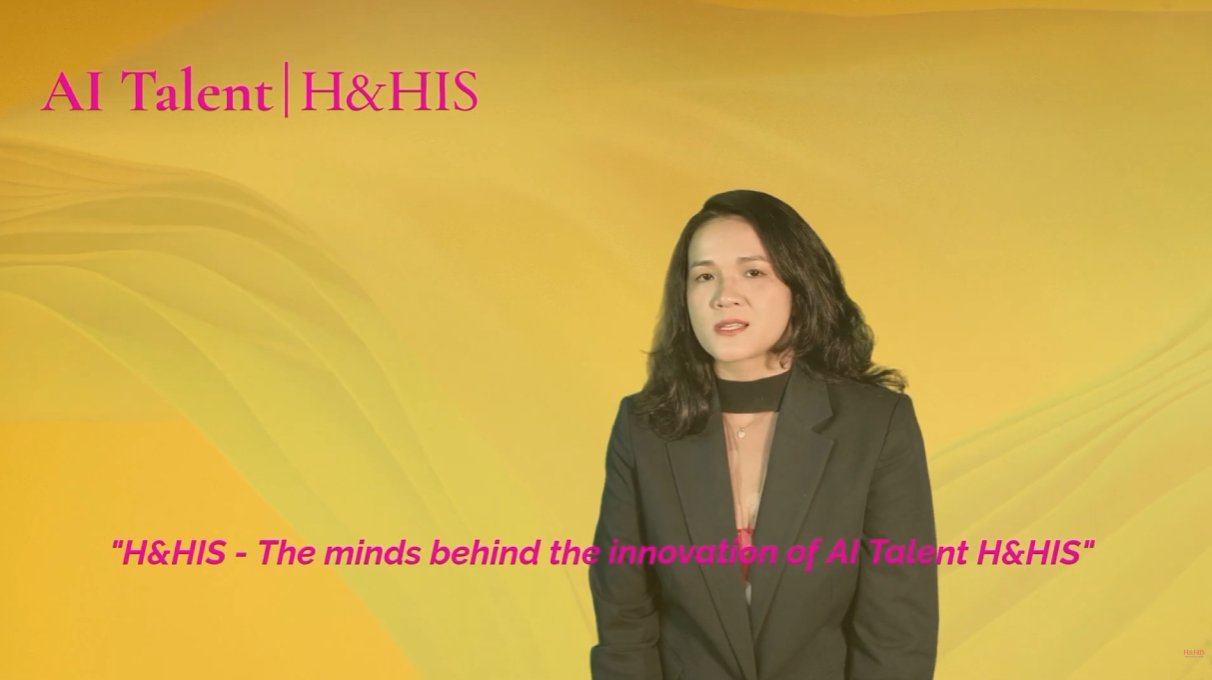
”H&HIS – The minds behind the innovation of AI Talent H&HIS“