Taylor Swift Did Not Succeed on Emotion Alone and the Same Is True of Companies
Taylor Swift Did Not Succeed on Emotion Alone and the Same Is True of Companies
The arts may seem purely intuitive, yet world-class artists are assessed, trained, and developed against a clear competency framework. The same applies to companies: when hiring and evaluating people by gut feel, an organization struggles to break through its ceiling. Sustainable success comes not from a single skill, but from a competency framework that is designed, accumulated, and continually upgraded over time.
🎥 Watch the AI Talent H&HIS introduction video here.
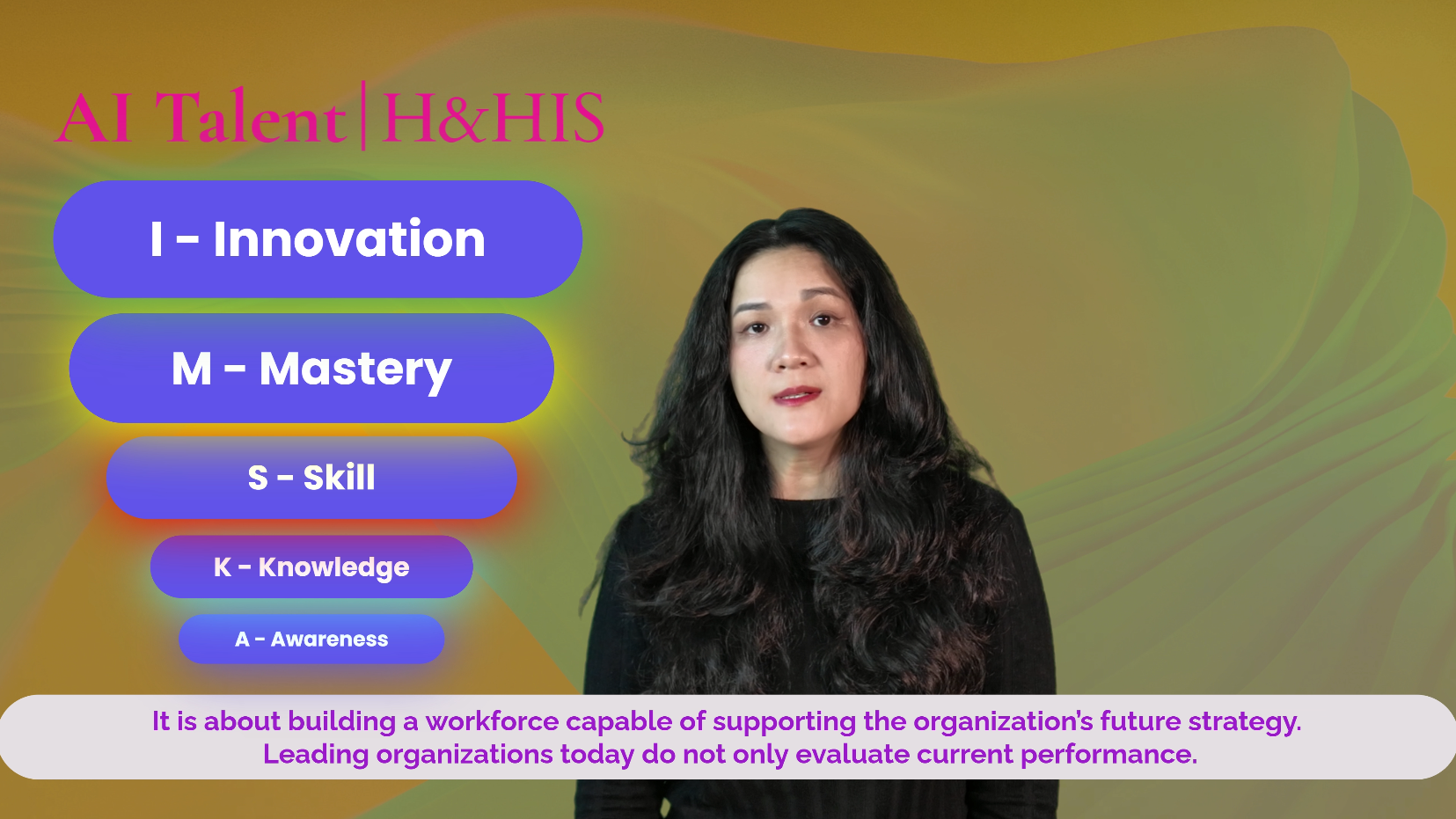
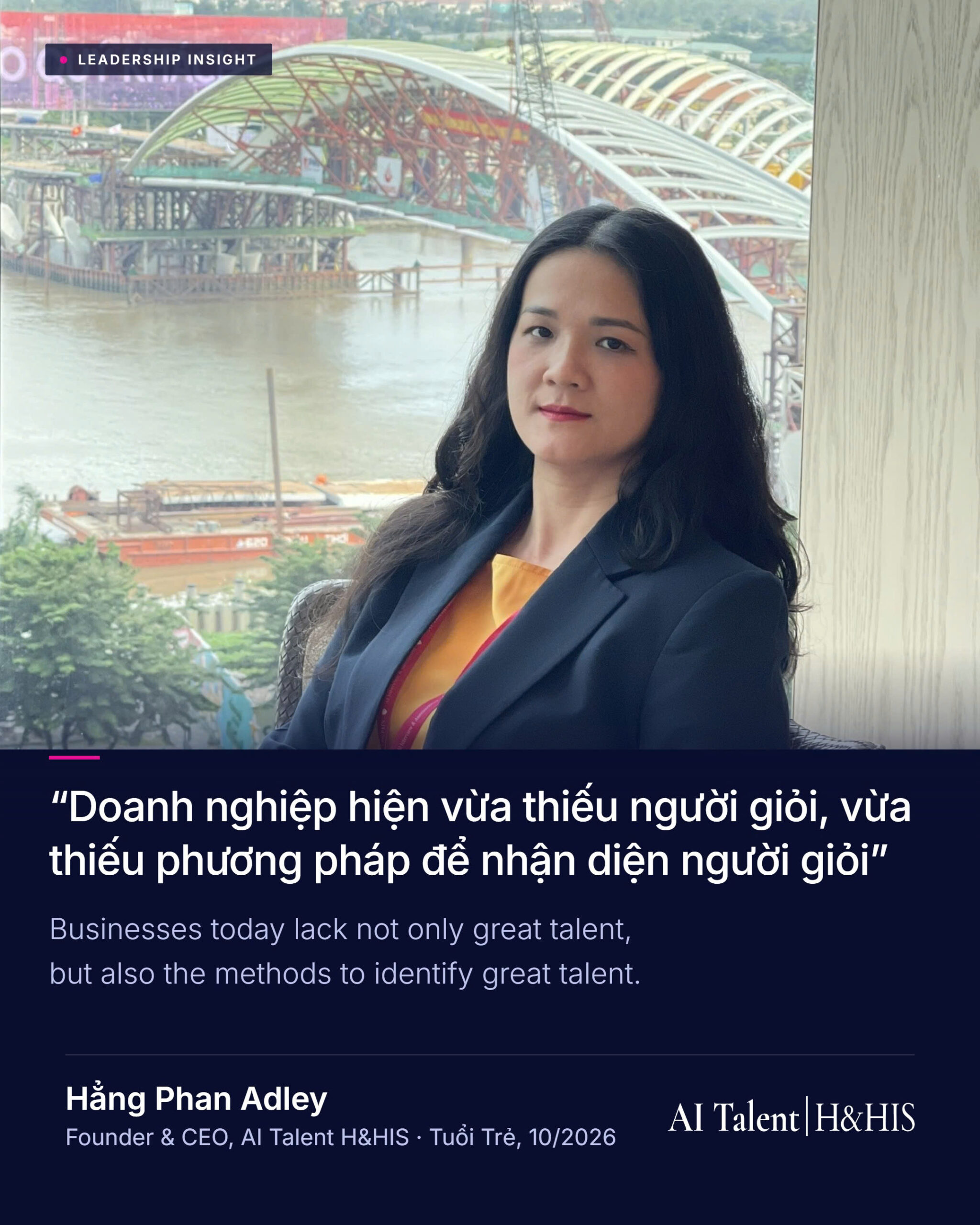
In the previous video, Ms. Hẳng Phan Adley, Founder & CEO of AI Talent H&HIS, explained that companies do not lack talented people, and that the CEO role is not merely a title but a competency framework. In this video, she approaches the issue from a different angle: an organization has difficulty growing beyond its current limits without clear competency standards. (Shared by CEO & Founder Hẳng Phan Adley on April 3, 2026 – Click to watch the video)
A Lesson from the Performing Arts
To understand this, consider an industry that seems very different from the rest: the arts, specifically singers and performing artists. It is a demanding field built on clear criteria.
When evaluating a professional artist, particularly in international markets, people typically do not rely on subjective, general impressions such as “this person sings well” or “performs well.” They assess against a clear competency framework, for example:
– Strong breath control.
– Skillful song interpretation.
– Compelling stage presence: engaging the audience and holding their attention.
– The ability to convey emotion and connect with the audience.
That is a complete competency framework. Only with such a framework can performance be scored. Look at talent competitions or major awards such as the Grammys: without any standards, how could assessment be fair, how could anything be measured, and certainly how could artists be trained and developed? (Competitions typically use specific scoring rubrics, while major awards are usually decided by expert panels applying criteria of artistic quality.)
Taylor Swift: Famous for More Than a Beautiful Voice
In top global artists such as Taylor Swift, the role of competency standards is easy to see. She is not famous merely for having a beautiful voice. She also possesses a highly standardized competency framework: stable breath control, precise live performance, and emotional delivery that has remained consistent over many years. As a result, she maintains performance quality across many different stages, regardless of external conditions.
Taylor Swift is also a prime example of an artist who keeps expanding her capabilities and growing over time. She is not only a singer but also a songwriter, with a clear gift for storytelling and the ability to build a consistent personal brand. She understands the market and sets the long-term direction of her career.
Across the stages of her career, Taylor Swift has evolved through many genres, from country to a far wider range of styles. Yet she has always retained her core competence: connecting powerfully with her audience and fans.
This illustrates a clear principle: sustainable success comes not from isolated skills, as discussed in earlier videos, but from a competency framework that is designed, accumulated, and continually upgraded over time.
And What About Companies?
Returning to business, many organizations manage and evaluate their people much as we might admire a singer out of personal affection: hiring and deploying people on subjective judgment. “I think they’re fine.” “This person probably has experience.” “I think they worked at a big company.”
But on closer inspection, we cannot answer the core questions:
– Where is this employee or candidate strongest?
– Which capabilities do they lack?
– Are they truly the right fit for that role in our organization?
This shows that the organization is relying on gut feel to run systems that should be standardized through competency standards.
What Does a Sound Competency Framework Look Like?
According to management and human resource theory worldwide, every role in an organization should be defined by clear competencies, in which:
– Each competency has a specific definition and defined proficiency levels.
– There is a method of measurement.
– There is a development pathway for each role.
This is the foundation for linking recruitment, training, assessment, and people development into a single, unified system.
Jim Collins’s “First Who, Then What”
This view is quite consistent with Jim Collins’s thinking in Good to Great, in the principle of “First Who, Then What”: first get the right people, and only then decide what they should do. (In Collins’s metaphor, this means getting the right people on the bus before deciding where the bus is going.)
To identify the right people, a company cannot rely on vague impressions. It needs a specific competency framework for each role. Without standards, it is hard to determine who the right people are, and hard to place them in the right positions.
The Consequences of Having No Standard Competency Framework
The problem for many companies today is not only a shortage of people or training, but the lack of a standard competency framework that ties all management activities together. Without one:
– Hiring tends to default to gut feel.
– Training struggles to hit its purpose.
– Candidate and employee assessment lacks clarity.
– Career progression is vague and without basis.
The result is that the organization does not build real capability. It merely accumulates people over time in a fragmented way.
A Truth That Applies to Every Organization
A singer who wants to reach international standard must train and develop their skills to international standards. A company that wants to grow must likewise operate against clear competency standards, in line with global practice. It is hard to find an organization that is the exception.
The question for CEOs and HR leaders, then, is not “Do we have job descriptions?” but “Do we have a real competency framework?” Are we evaluating people on impressions and past achievements, or on capabilities that can be measured and developed?
Without a competency framework, it is difficult to train correctly, deploy the right people, and raise the organization to a higher level. Often, a company fails to break through its ceiling not because of the market, but because it lacks a standard competency framework to elevate the organization’s capabilities.
A Platform to Help Organizations Build Competency Frameworks
That is why AI Talent H&HIS was built. The platform does more than help organizations interview and assess candidates. It also helps them to:
– Build competency frameworks in line with international practice.
– Redefine the standards for each role.
– Measure and identify capability gaps.
– Design clear development pathways.
In the end, an organization cannot be built to grow without competency standards.
Is your organization evaluating people on impressions or against a clear competency framework? Contact the AI Talent H&HIS team for guidance on building a competency framework and an assessment system suited to your business.
Watch the full talk here: AI Talent H&HIS: Taylor Swift Did Not Succeed on Emotion Alone, and the Same Is True of Companies – YouTube
AI Talent H&HIS – Hire Smarter. Grow Faster.
Explore now: https://aitalenthhis.com
Hotline: (+84) 97 360 7502
📩 Sign up for a free trial today and start optimizing your hiring process with AI.
For expert consultation, contact: bd@hinternationalstrategy.com
AI Talent H&HIS, the leading AI-powered interview and skills assessment platform in Vietnam and Southeast Asia.
”H&HIS – The minds behind the innovation of AI Talent H&HIS“