Companies Dont Lack Strategy – They Lack Alignment Between Culture and Behavior
Companies Dont Lack Strategy – They Lack Alignment Between Culture and Behavior
Many companies have a clear strategy, a full set of KPIs, and plenty of talented hires, yet decisions remain slow, functions fail to coordinate, and the organization cannot scale. The root cause often lies in the gap between the culture an organization aspires to and what actually happens day to day. Culture is not a slogan. It is the mechanism that steers behavior and decisions every day.
🎥 Watch the AI Talent H&HIS introduction video here.
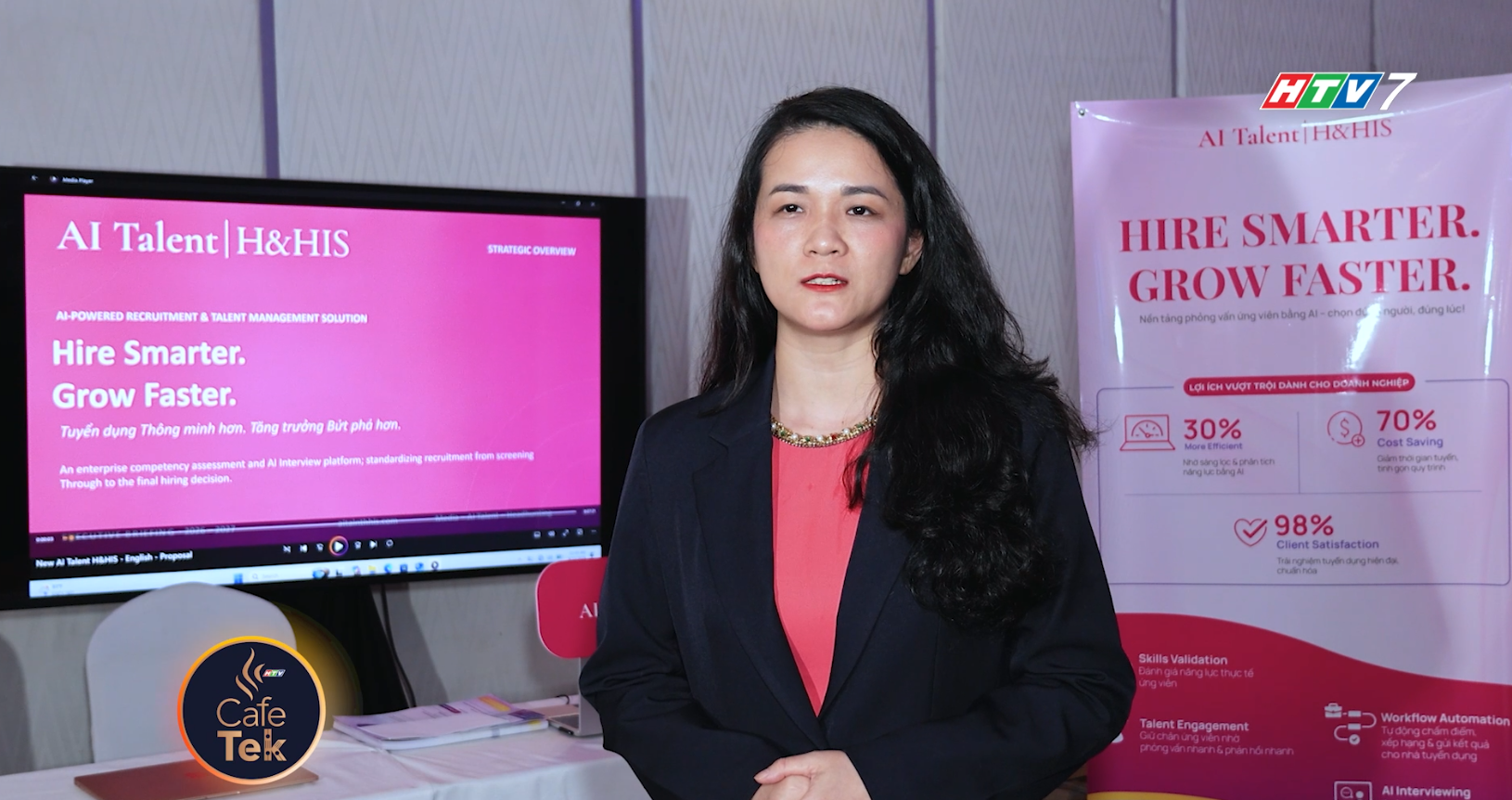
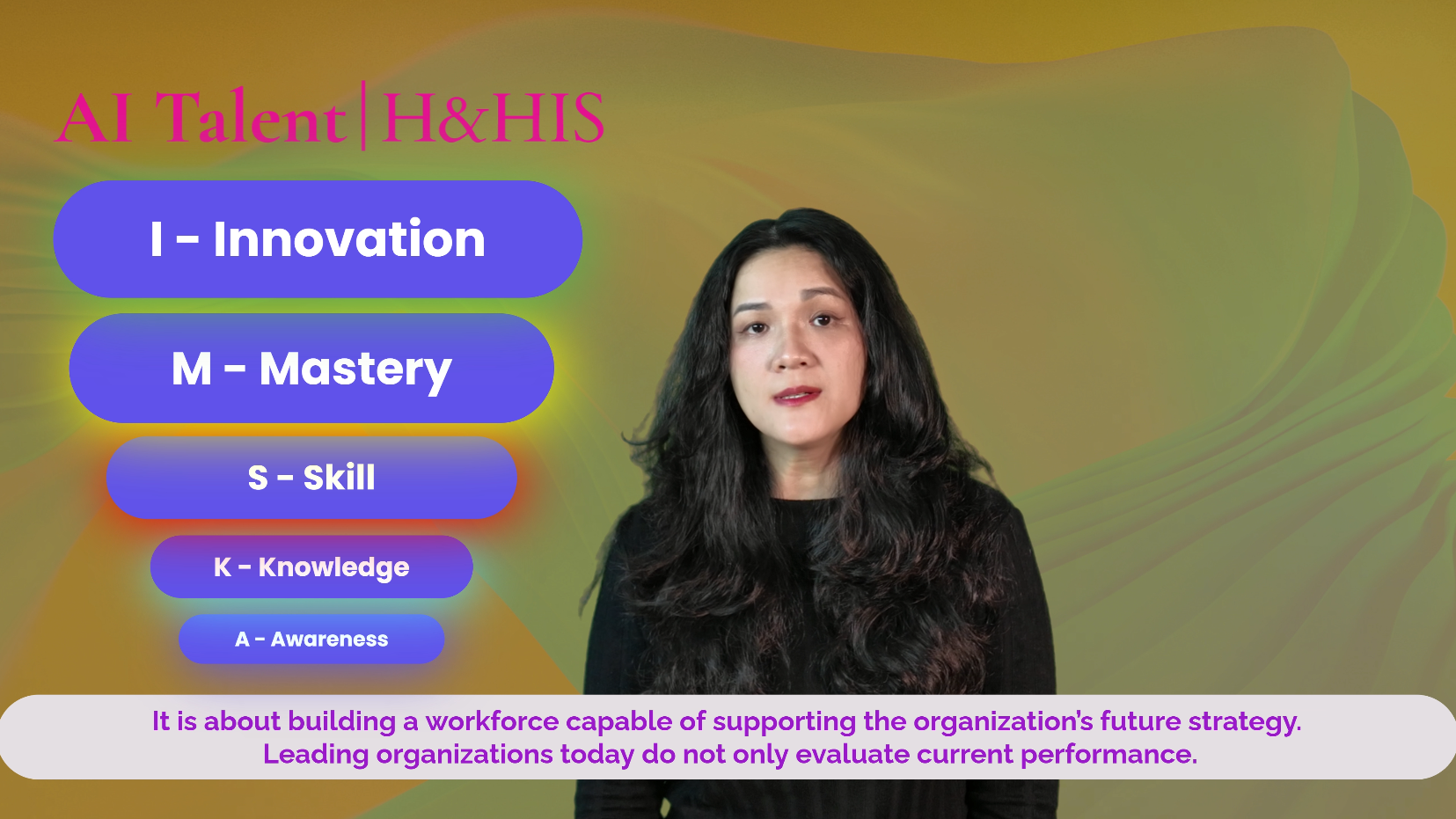
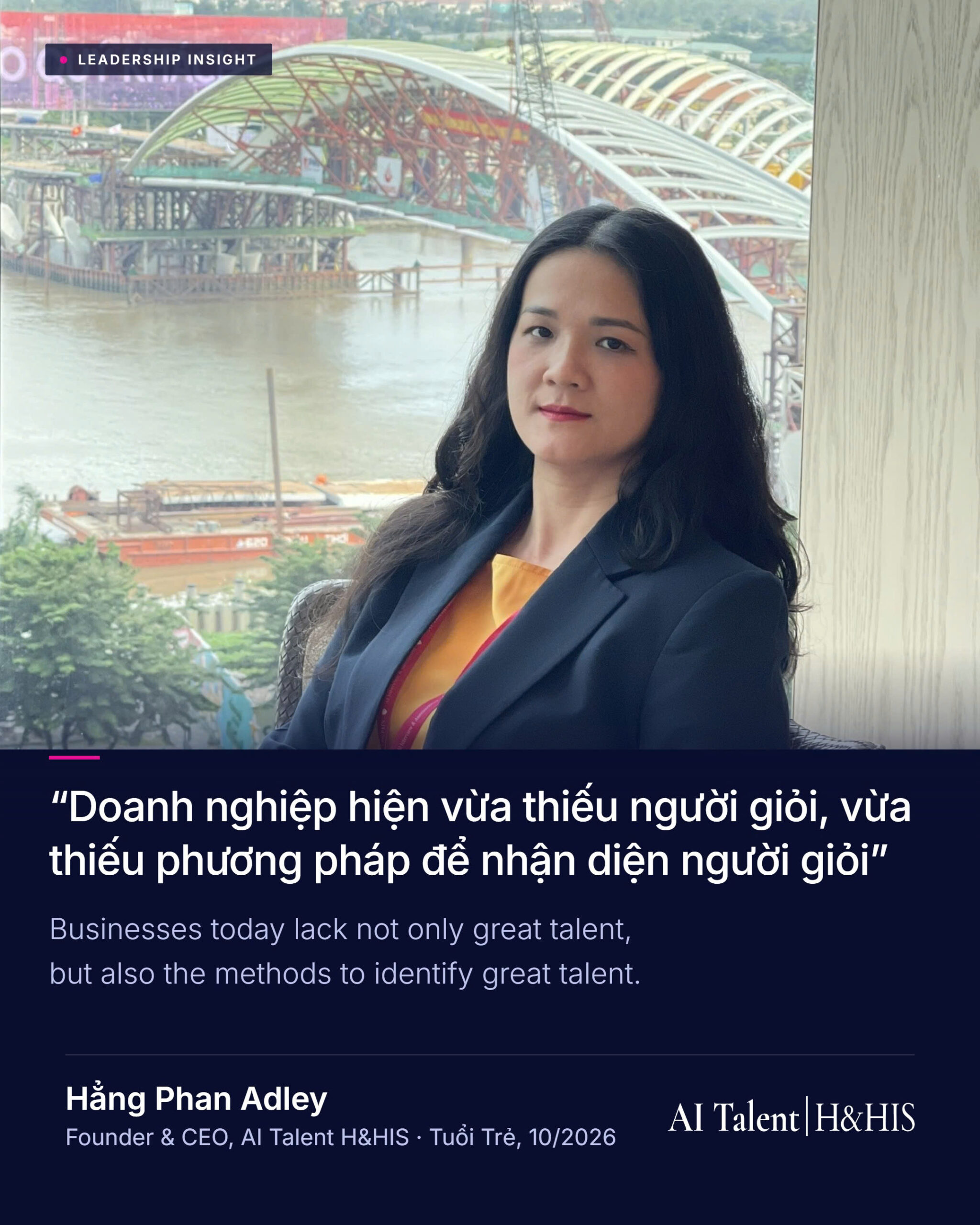
In the previous video, Ms. Hẳng Phan Adley, Founder & CEO of AI Talent H&HIS, discussed redefining HR strategy with capability at its core. In this video, she shares a critically important topic in organizational management: companies often fail not for lack of strategy, but because strategy is not executed consistently. The root cause lies in the gap between the culture an organization aspires to and the reality that unfolds. (Shared by CEO & Founder Hẳng Phan Adley on April 6, 2026 – Click to watch the video)
An Organization That Looks Great but Does Not Operate Effectively
Look at the reality of many companies, and we see that they all declare a very clear strategy, always have a complete KPI system, and hire many talented people. Yet the outcome is slow decisions, functions that do not coordinate well, and, ultimately, an organization that cannot scale.
According to research by leading experts worldwide, an organization’s effectiveness comes not only from what it declares, but from the degree of alignment between culture and behavior, that is, how the organization actually operates. One important reason organizations underperform is a lack of alignment among their internal components.
Misalignment Occurs at Three Levels
– First: between declared values and reality: the organization says one thing and operates in another way. (In organizational theory, this is the gap between “espoused” and “enacted” values, a distinction that traces back to Argyris and Schön’s work on espoused theory and theory-in-use.)
– Second: between functions: each function optimizes for its own goals, yet the system as a whole is not optimized.
– Third: between strategy and day-to-day operations: strategy is long-term, but decisions are made with short-term horizons and do not follow the strategic direction set at the outset.
This is why an organization can look excellent yet operate ineffectively in practice.
How Do Leading Organizations Address This?
Successful companies around the world address this problem methodically. A few familiar examples:
– Amazon: does not merely articulate cultural values. It turns them into a set of Leadership Principles that are used directly in hiring and in everyday decision-making.
– Netflix: builds its culture on the principle of freedom and responsibility. Employees are given broad empowerment, yet are held to very high accountability for their results. The company tightly links expectation with reality.
– Microsoft: under Satya Nadella, shifted from a “know-it-all” mindset to one of continuous learning, focusing on the ability to learn and adapt in a fast-changing environment.
What they share is that culture is not a showy slogan. It is a mechanism that steers behavior and decisions in the organization every day.
When Culture Is Communicated but Does Not Operate as a System
The problem in many companies today is that culture is communicated but does not actually operate as a system. The consequences are:
– No clear behavioral standards.
– No concrete way to measure it.
– No link to hiring and assessment.
In the end, culture struggles to produce real performance.
What Is Organizational Culture, Really?
According to modern management theory, organizational culture is in essence a set of repeated behaviors in the decision-making process. (According to Edgar Schein, behavior is the most observable layer of culture, while beneath it lie the organization’s espoused values and its underlying assumptions. Changing behavior is therefore an important starting point, but it needs to be accompanied by changes in those underlying assumptions.)
This means that to change culture, an organization must change how its people think every day, how they make decisions, and how they act within the system.
The Role of AI: Understanding Better How People Think and Decide
As shared in many earlier videos, AI does not replace people. It helps us better understand how employees think, approach problems, and make decisions in practice. AI can support us in three ways:
– Analyzing repeated behavior in how a person reacts to and handles situations.
– Analyzing how each employee approaches and solves problems, rather than looking only at final outcomes.
– Placing people in different scenarios to observe and verify how they make decisions in new, complex contexts.
From this, companies gain a clearer picture of the true capability behind behavior and action, not only what a person has done, but how they are likely to act in the future.
A Platform That Connects Capability to Real Performance
That is why AI Talent H&HIS was built. The platform does more than help organizations interview and assess candidates. It helps companies understand their people within the system more effectively, based on how they think, how they approach each problem at work, and how they make decisions, rather than relying only on past experience or track record. More important still is the ability to connect those capabilities to the organization’s real performance.
Conclusion
According to experts who study organizational behavior, an organization’s effectiveness comes not only from strategy, people, or systems, but also from the degree of alignment between culture and how the organization makes decisions and acts in practice. Even when a company has the right strategy, talented people, and sound systems, if behavior within the organization is not consistent with those directions, the organization may still fail to operate effectively.
Culture, therefore, is not what an organization declares to the outside world. It is how its people decide and act every day. In the AI era, the organizations that grow sustainably are likely to be not those that talk best about culture, but those able to understand, measure, and adjust organizational behavior consistently and systematically.
Is your organization declaring its culture, or living it every day? Contact the AI Talent H&HIS team for guidance on building a competency framework and an assessment system suited to your business.
Watch the full talk here: AI Talent H&HIS: Companies Don’t Lack Strategy. They Lack Alignment Between Culture and Behavior – YouTube
AI Talent H&HIS – Hire Smarter. Grow Faster.
Explore now: https://aitalenthhis.com
Hotline: (+84) 97 360 7502
📩 Sign up for a free trial today and start optimizing your hiring process with AI.
For expert consultation, contact: bd@hinternationalstrategy.com
AI Talent H&HIS, the leading AI-powered interview and skills assessment platform in Vietnam and Southeast Asia.
”H&HIS – The minds behind the innovation of AI Talent H&HIS“