Companies Dont Lack KPIs. They Lack Performance Management
Companies Dont Lack KPIs. They Lack Performance Management
A quiet, subtle problem is hard to spot: companies have a performance management system, yet it does not produce real performance. KPIs only let an organization look back at results after everything has already happened. True Performance Management is a continuous process of dialogue, feedback, and development, and it is how a company talks to its people every day.
🎥 Watch the AI Talent H&HIS introduction video here.
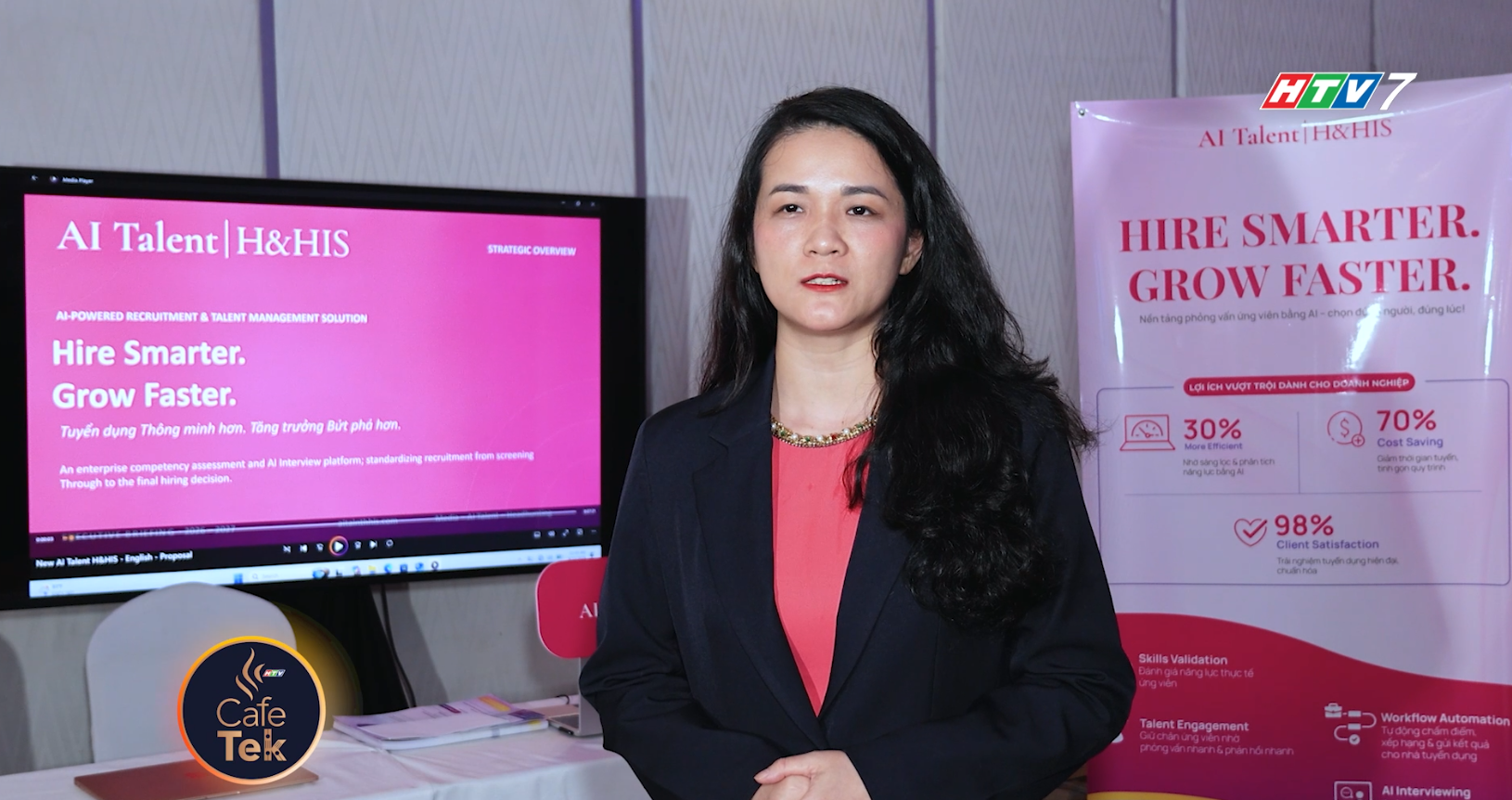
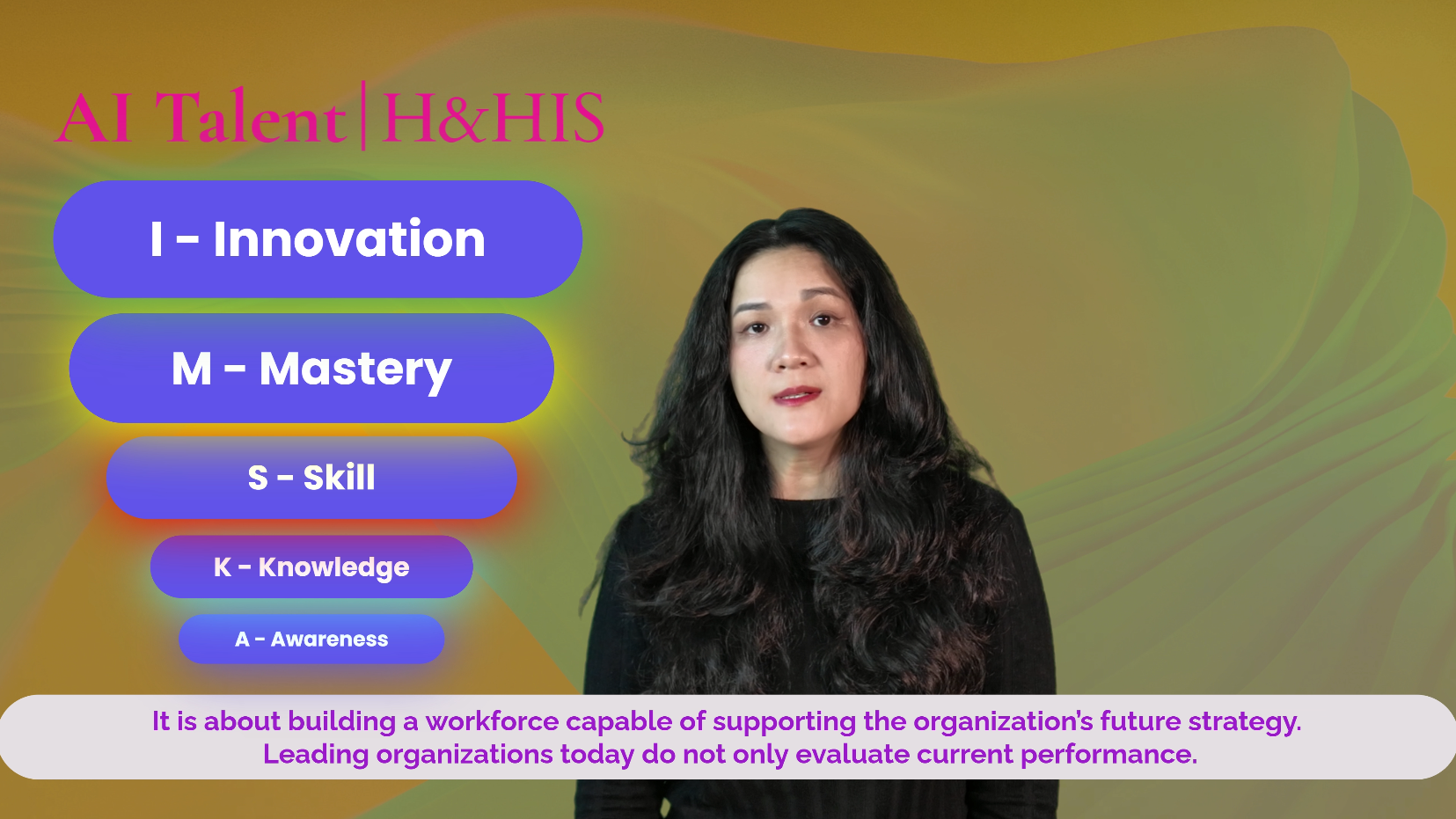
In the previous video, Ms. Hẳng Phan Adley, Founder & CEO of AI Talent H&HIS, explained that companies can still fail when they see the future but do not act. In this video, she turns to a different problem, one her team has seen clearly in its work with partners and clients: companies have a performance management system, yet it does not produce real performance. (Shared by CEO & Founder Hẳng Phan Adley on March 30, 2026 – Click to watch the video)
A System Without Performance
Many companies practice Performance Management, sometimes called performance appraisal. Almost everyone assigns KPIs at the start of a period, then sits down at the end to review, evaluate, and rank, and assumes that this is performance management.
But KPIs only allow an organization to look back at results after everything has already happened. If, throughout the period, the company does not track progress, make adjustments, or provide timely support, then however impressive the numbers look at period-end, they are only a report on the past. They are not a tool that helps the company reach its goals.
Performance Management Is a Continuous Process, Not Just a Year-End Review
According to the widely accepted view in the professional literature, Performance Management is a continuous process of identifying, measuring, and developing the performance of individuals and teams, aligned with the organization’s strategic goals. Formal evaluation is one component of that process, not the whole of it. Between review cycles, three activities largely determine performance:
– Dialogue: employees and managers talk regularly rather than waiting for the end of the period.
– Feedback: managers give timely input and make adjustments that shape behavior and work outcomes.
– Development: the process helps employees grow, rather than simply scoring them.
Evaluating employees is only a small part of Performance Management, not the whole. Its purpose is not to learn what employees have done, but to ensure that the organization and its people are heading in the right direction while the work is still underway.
The Lesson from Adobe
Consider Adobe, the global technology company behind creative and design software, with familiar products such as Photoshop and Creative Cloud. Adobe once used a traditional performance review system, like many other companies, with year-end ratings and rankings. Around 2012, it abandoned that model entirely and moved to a new approach called Check-in.
The reason was that year-end scoring was not helping the company succeed. Employees were not developing, managers were reluctant to give feedback, and results did not truly improve.
Under the new model, Adobe holds frequent, short conversations between managers and employees. The purpose is not to score, but to update goals, help employees overcome obstacles, and build their capabilities. The company shifted from evaluating people to supporting their development.
The results Adobe reported:
– Voluntary turnover fell by roughly 30%.
– Tens of thousands of manager hours were saved each year.
– Employee engagement rose.
– Managers became more proactive in leading their teams.
KPIs: A Tool for Control or for Direction?
The core issue is that evaluating and ranking employees is not wrong in itself. What deserves attention is that many companies use KPIs as a tool of control rather than a tool of direction and development.
Her team sees this often when working with organizations. At the outset, managers typically ask: what is the process, and how should we evaluate? After working together, they begin asking different questions:
– How do we give employees feedback without demotivating them?
– How do we achieve our goals while keeping our team members?
This is where Performance Management truly begins: moving from managing results to leading people.
The Line Manager Is the Decisive Link
Many companies have a standard process, but if managers do not understand its essence, the system cannot work well. Managers are the ones who turn goals into action, turn feedback into motivation, and turn objectives into real results. They are not scorekeepers. They are the ones who lead performance every day.
The CEO’s question must change as well. It should not be “How well are we controlling our employees?” but “How are we helping our teams grow and perform better every day?”
The New Role of HR
At this point, the role of HR changes. HR must be able to answer:
– Do middle managers know how to give feedback and coach their people?
– Do they know how to guide employee development against the competency standards of the employee’s current role, or against the competency framework along that person’s career path?
– Is a culture of continuous feedback actually operating every day in the organization, or does it exist only on paper and in theory?
If HR cannot answer these questions, the entire Performance Management process is just a beautiful set of forms that creates no competitive advantage in practice.
Conclusion
Companies do not lack KPIs. They lack true Performance Management. Performance Management is not KPIs. It is how a company talks to its people every day. It is not an end-of-period evaluation, but a process of continuous partnership. Performance comes not from focusing on KPIs, but from leading people the right way.
That is why AI Talent H&HIS was built. The platform does more than help organizations interview and assess candidates. It also helps them assess the capabilities of their teams so the business can grow.
Is your organization using KPIs to control or to lead? Contact the AI Talent H&HIS team for guidance on building a competency framework and an assessment system suited to your business.
Watch the full talk here: AI Talent H&HIS: Companies Don’t Lack KPIs. They Lack Performance Management. – YouTube
AI Talent H&HIS – Hire Smarter. Grow Faster.
Explore now: https://aitalenthhis.com
Hotline: (+84) 97 360 7502
📩 Sign up for a free trial today and start optimizing your hiring process with AI.
For expert consultation, contact: bd@hinternationalstrategy.com
AI Talent H&HIS, the leading AI-powered interview and skills assessment platform in Vietnam and Southeast Asia.
”H&HIS – The minds behind the innovation of AI Talent H&HIS“