The Biggest Mistake a CEO Can Make Is Believing That People Are the Risk
The Biggest Mistake a CEO Can Make Is Believing That People Are the Risk
“The greatest of all risks is people.” It sounds reasonable, and many leaders agree. But if people are the risk, then what is the organization’s system doing to create that risk.
🎥 Watch the AI Talent H&HIS introduction video here.
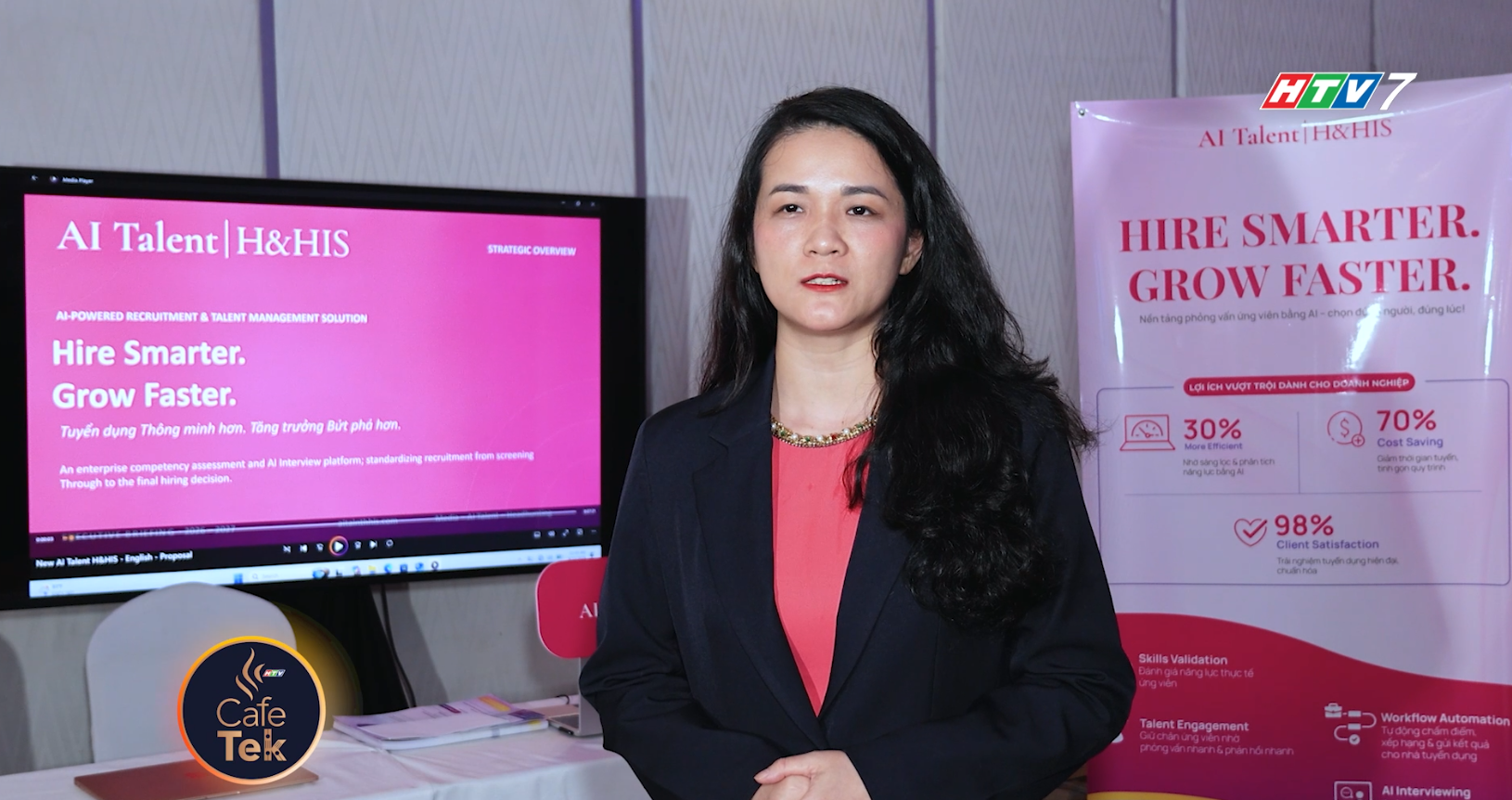
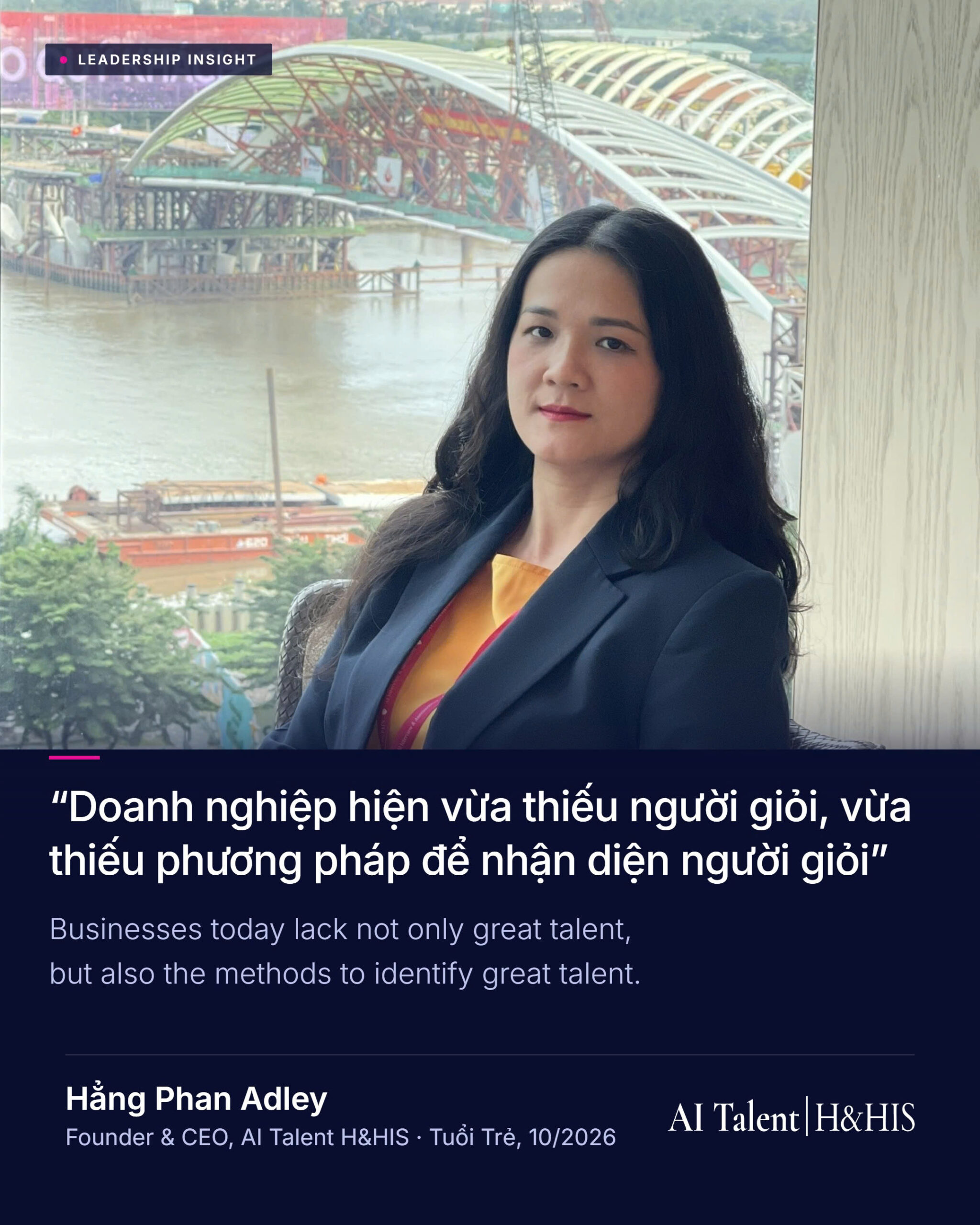
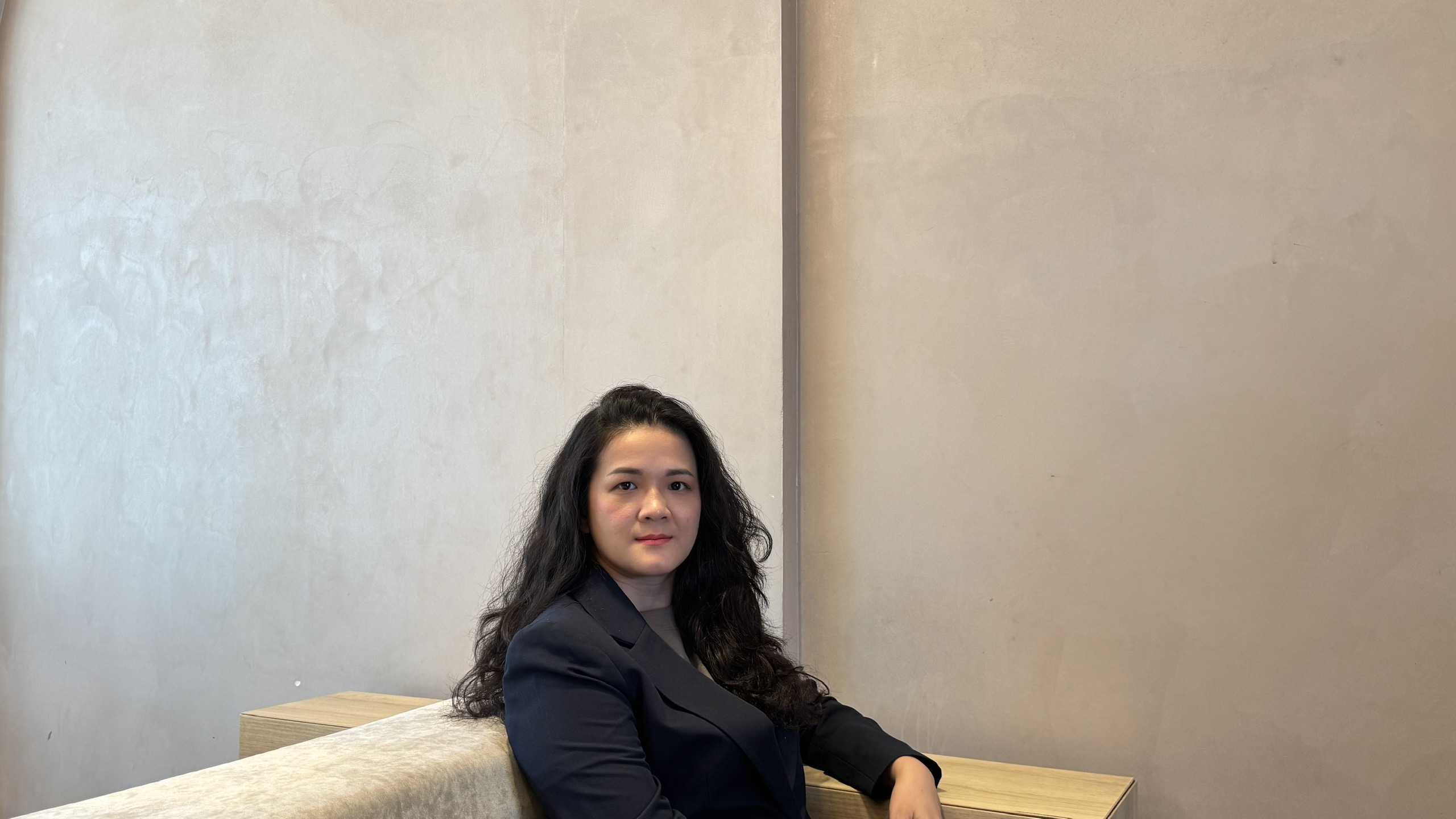
In this video, Ms. Hang Phan Adley, Founder & CEO of AI Talent H&HIS, challenges a view once shared by a business leader: that people are the greatest risk of all. She turns the question back on CEOs and HR professionals: if people are the risk, what is our organizational system doing to create that risk? (Based on the talk by Founder & CEO Hang Phan Adley on April 17, 2026 – Watch the video)
Managing through suspicion
The leader in question does not trust people, keeps employees under close surveillance, and takes pride in doing so. Periodically, he requires employees to take around 15 days of leave. During this time, they may not work, come into the office or log in to any system. He sends designated staff to audit all of the work of those on leave, with two aims:
– To uncover misconduct within the system
– To assess dependency on individuals, so that no one becomes irreplaceable
But this mindset has a major flaw: if an employee can create risk for 11 months, what is the point of a 15-day check?
An uncomfortable truth needs to be stated plainly: the real risk lies in an organization’s inability to oversee employee behavior every single day.
Goldman Sachs: controls every day, not once a year
According to research organizations worldwide, global financial institutions such as Goldman Sachs never wait a year, or 11 months, to start reviewing their systems. They manage risk every day through systems:
– Daily internal controls built into processes: no one can act improperly without being detected
– Segregation of duties: no single individual controls an entire internal process
– Real-time monitoring: errors are detected the moment they occur, not at the next audit
At these organizations, periodic reviews are only a supplementary layer within a system of daily controls. They are not the primary tool, and they do not stem from treating people as the risk.
Toyota: people make mistakes, so the system stops them from spreading
Toyota does not assume that people never make mistakes. That is why it built the Andon system, which allows any employee to stop the production line the moment they spot a problem:
– Defects are detected immediately
– Detection does not depend on any one individual or “star performer”
– No one waits 11 months to find out
Toyota accepts that people can make mistakes, but designs its system so that mistakes can never spread across the organization.
Netflix: control through systems and talent quality, not rules
Netflix places almost no restrictions on employees: they take time off when they choose, and the company does not track working hours. But Netflix has very high talent density: its workforce consists mainly of genuinely capable people. Without that capability, it would not have achieved its success today.
Netflix has designed a system with very clear accountability. It does not control through rules, but through systems and the quality of its people.
A Vietnamese retailer: run on data
In Vietnam, one business has built highly detailed operating processes, tracks data by store and by day, and measures every metric, including revenue. It is managed by systems rather than gut feeling, and that is why it has been so successful.
However, the lesson is equally clear: even a business with strong execution capabilities will still face risk if its operating system cannot keep pace with its expansion.
The problem has never been people
The full truth is that the problem has never been people. It lies in a system that puts them in the wrong place, in the wrong role.
If an organization manages through suspicion, rigid control and periodic inspection, as the leader above does, the consequences are clear:
– It loses its truly talented people
– It loses those willing to take ownership
– It loses its very ability to deliver results
– And it will never attract genuine talent or achieve sustainable growth
This is a common mistake: using suspicion to manage people.
The philosophy of sound governance
Organizational, business and management systems exist to maximize an organization’s effectiveness. Within them, people are the most important resource for driving business activity and delivering results.
A sound governance system is designed to prevent risk from the outset, before it materializes. And the very purpose of human capital is to create value for the organization, not to struggle against weak management mechanisms.
Not controlling people, but understanding capability
That is why AI Talent H&HIS does not help organizations control people. Instead, it helps them:
– Assess execution capability against clear standards
– Compare current capability with the requirements of the role
– Identify points of misalignment within the organization
– See people-related risks before they become problems
Organizations do not need to wait until month 11 to inspect. Nor do they need to choose between blind trust and operating on suspicion. They can operate on data and systems.
Organizations do not fail because people are too risky. They fail because they build systems that force people to become risks.
If you are a CEO, a leader or an HR professional: are you controlling people, or designing a system in which your people cannot succeed?
Watch the full talk: AI Talent H&HIS: The Biggest Mistake a CEO Can Make Is Believing That People Are the Risk – YouTube
AI Talent H&HIS – Hire Smarter. Grow Faster.
Explore now: https://aitalenthhis.com
Hotline: (+84) 97 360 7502
📩 Sign up for a free trial today and start optimizing your hiring process with AI.
For expert consultation, contact: bd@hinternationalstrategy.com
AI Talent H&HIS, the leading AI-powered interview and skills assessment platform in Vietnam and Southeast Asia.
”H&HIS – The minds behind the innovation of AI Talent H&HIS“