Why Do All Decisions Still Flow to the CEO?
Why Do All Decisions Still Flow to the CEO?
Many organizations have full teams, departments and processes in place, yet the final decision-maker is still always the CEO. The issue is not a shortage of people, but that the organization has not designed a clear decision-making system.
🎥 Watch the AI Talent H&HIS introduction video here.
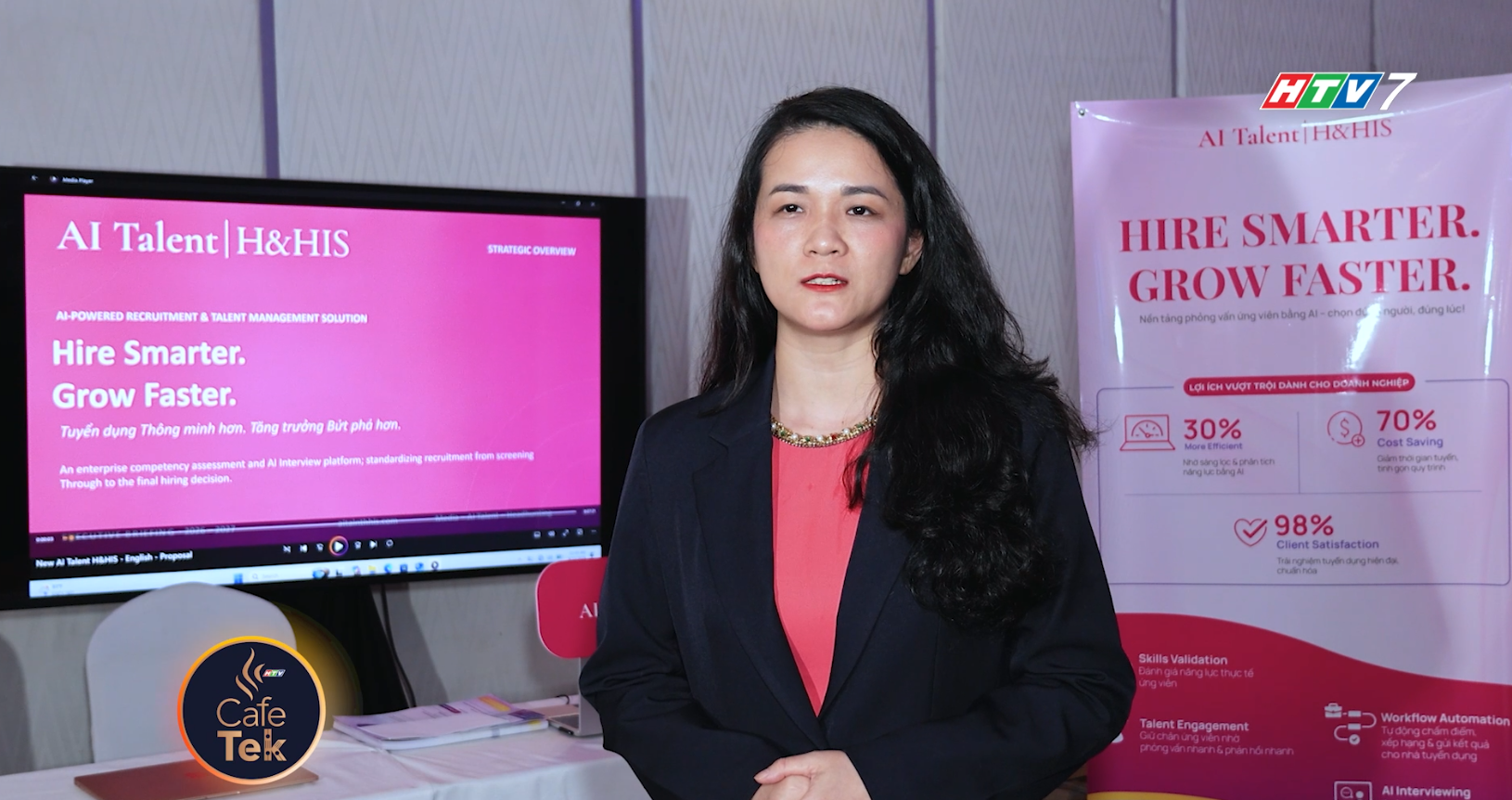
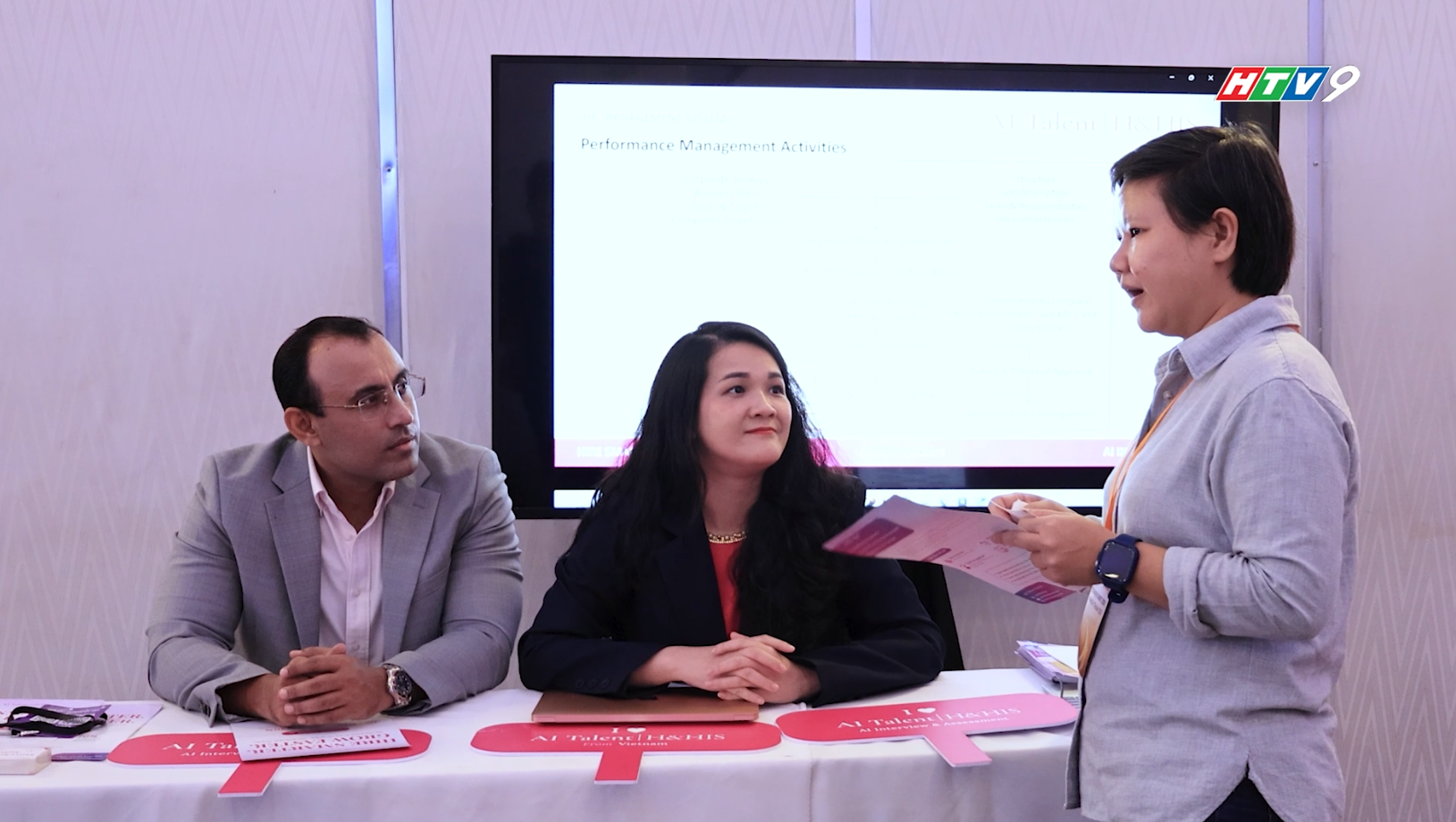
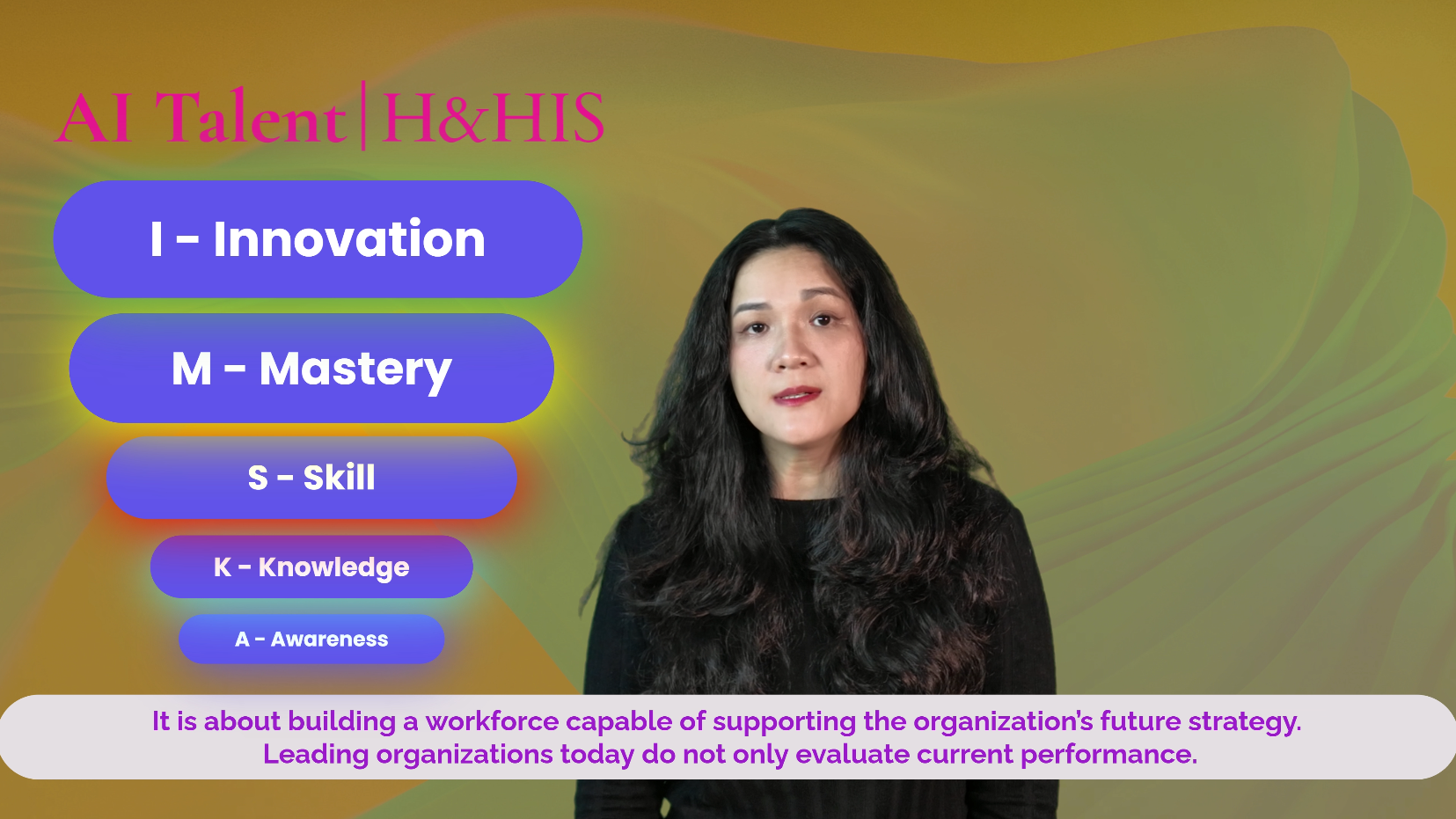
In her previous video, Ms. Hang Phan Adley, Founder & CEO of AI Talent H&HIS, explained why intuition is no longer enough for talent management. In this video, she addresses a question many leaders ask themselves: why, with a full team and every department in place, do all decisions still flow to the CEO? (Based on the talk by Founder & CEO Hang Phan Adley on April 15, 2026 – Watch the video)
As organizations grow, decision volume outpaces the structure
The more a business grows, the faster the volume of decisions increases, far outpacing the growth of the organization itself. Yet in many companies, decisions still converge on a single point: the CEO.
Five real-world cases illustrate the consequences.
Boeing: when information is not adequately challenged
With the Boeing 737 MAX, a flaw in a flight control software system led to highly dangerous situations, including two fatal crashes, resulting in the aircraft being grounded worldwide.
According to subsequent investigation reports:
– Certain design decisions and risk assessments were not fully communicated across departments
– Stakeholders did not genuinely collaborate to clarify and resolve issues throughout the development process
– Critical information was not communicated fully and transparently
The lesson: when a decision-making system lacks transparency and robust challenge from all stakeholders, the risk no longer lies with an individual or a technical fault, but with how the organization makes decisions.
Vinashin: when decisions are centralized without oversight
Between 2006 and 2010, Vinashin, the Vietnam Shipbuilding Industry Group, expanded into numerous sectors outside its core business. According to reports from government authorities and auditors:
– The investment decision-making process lacked rigorous control and oversight
– Many critical decisions were concentrated in the hands of a few senior leaders
– Underperforming projects were not identified early
Financial risk accumulated over time, and by the time it surfaced, it had become a major crisis. The lesson: when a system fails to allocate authority and control decision-making effectively, the risk comes not from a single wrong decision, but from decisions that go unchecked.
WeWork: when expansion outpaces governance
In the period leading up to its planned 2019 IPO, WeWork grew extremely fast while many key decisions remained concentrated with the CEO. According to analyses by leading experts:
– The company expanded at enormous speed and scale, signing many long-term leases while its revenue model was flexible and short-term
– Governance mechanisms, including board oversight, failed to keep pace with the company’s growth
– Financial risk built up without timely control
Investors began raising serious questions about how leadership was making decisions, and the IPO was ultimately called off. Notably, WeWork did not lack ideas, creativity or growth momentum. The problem was a system unable to control and distribute decision-making as the organization scaled.
Uber: when delegation fails to keep up with growth
During its hypergrowth phase, Uber expanded rapidly, but its governance and delegation structures did not keep pace. According to analyses by leading organizations worldwide:
– Key operational decisions during market expansion depended on a very small group of senior leaders
– Cultural and internal management issues were handled inconsistently across regions, markets and countries
– Information did not flow back up to leadership fully or in time
As a result, many issues were not detected and addressed promptly in individual markets. The company repeatedly found itself dealing with problems not at the outset, but only once they had become particularly serious.
A real-world case: a Vietnamese coffee company and competing centers of power
The fifth example comes from Ms. Hang Phan Adley’s own experience working with a well-known Vietnamese coffee company. During a period of governance disputes and asset division, executive decisions stalled and overlapped, and the organization operated with multiple parallel centers of power for an extended period. This had a significant impact on the business compared with its peak.
This is not a matter of individual capability, but of a structure lacking clarity and consistency.
What do these five cases have in common?
Whether decisions converge on a single point or are fragmented across competing centers of power, the root cause is the same. The problem for these organizations was not a lack of people, talent or capability, but the absence of a clearly designed decision-making system.
From a modern management perspective, decision-making is itself a capability. Each leadership level requires different skills and a different scope of decision-making (based on the Leadership Pipeline model by Ram Charan, Stephen Drotter and James Noel), so decision rights must be allocated by level and by role:
– Each management level has a different decision-making scope
– Each type of decision carries a different level of risk and impact
– Not every decision needs to go all the way up to the CEO
However, in many organizations:
– There are no clear standards for each type of decision
– Decision rights are not assigned based on capability
– The quality of decision-making is not measured
As a result, decisions consistently drift upward, and the CEO becomes the convergence point for every decision. This is the organizational “bottleneck” phenomenon. It is not an individual problem, but a sign of a system that has not effectively allocated capability and decision rights.
A capability gap that often goes unseen
An organization may have enough people, positions and experience, yet still lack the ability to make decisions at the right speed. This is a form of invisible capability gap.
As discussed in previous videos, AI cannot replace people, but it can help organizations better understand capability in a decision-making context. AI can help:
– Analyze how a person makes decisions, approaches and solves problems
– Assess decision-making behavior
– Benchmark against role-specific competency standards
– Determine each person’s fit for different types of decisions
This allows organizations to move beyond asking “who is performing well” to asking “who can make decisions at which level.”
The AI Talent H&HIS intelligent interview platform helps organizations:
– Build competency standards for each decision-making level
– Assess capability and identify bottlenecks in the system
– Redesign the structure of decision rights
The goal is not more control, but the right capability, the right decisions, at the right speed.
An organization cannot scale effectively if every decision flows to the CEO. The question is not whether the CEO is capable enough, but whether the system enables others to make sound decisions as well. In a modern organization, performance does not come from the CEO alone, but from how the entire organization makes decisions every day. In your organization, how many decisions are waiting on the CEO?
Watch the full talk: AI Talent H&HIS: Why Do All Decisions Still Flow to the CEO? – YouTube
AI Talent H&HIS – Hire Smarter. Grow Faster.
Explore now: https://aitalenthhis.com
Hotline: (+84) 97 360 7502
📩 Sign up for a free trial today and start optimizing your hiring process with AI.
For expert consultation, contact: bd@hinternationalstrategy.com
AI Talent H&HIS, the leading AI-powered interview and skills assessment platform in Vietnam and Southeast Asia.
”H&HIS – The minds behind the innovation of AI Talent H&HIS“