Companies Dont Lack Successors. They Lack a System to Assess Successor Capability
Companies Dont Lack Successors. They Lack a System to Assess Successor Capability
Many Vietnamese companies are reaching the point of generational transition. Most successors are well-educated and professionally trained, yet the handover still breaks down too often. The problem lies with neither the founding generation nor the next one. The root cause is that the organization lacks a clear competency framework to assess, develop and transfer leadership.
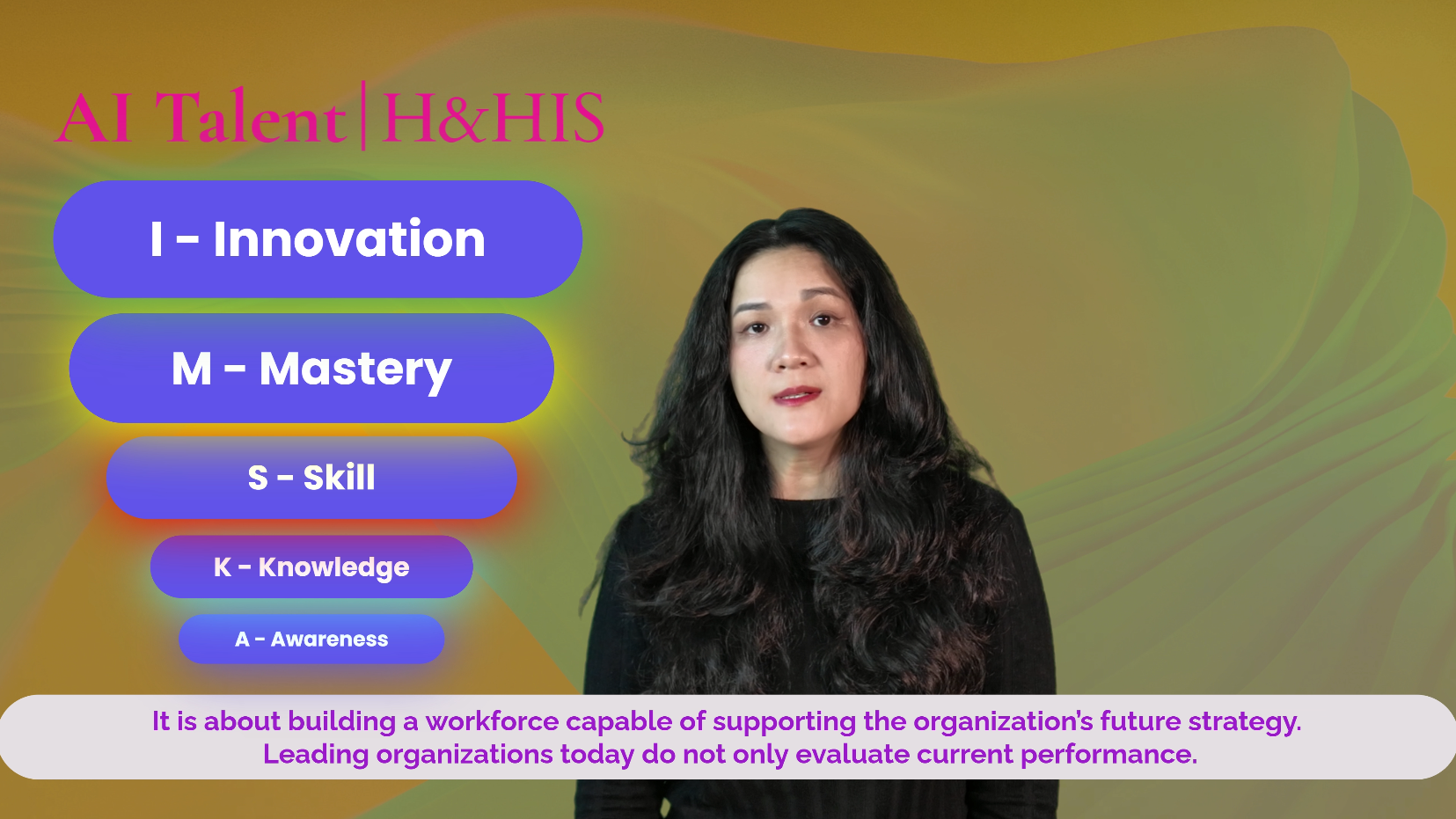
🎥 Watch the AI Talent H&HIS introduction video here.
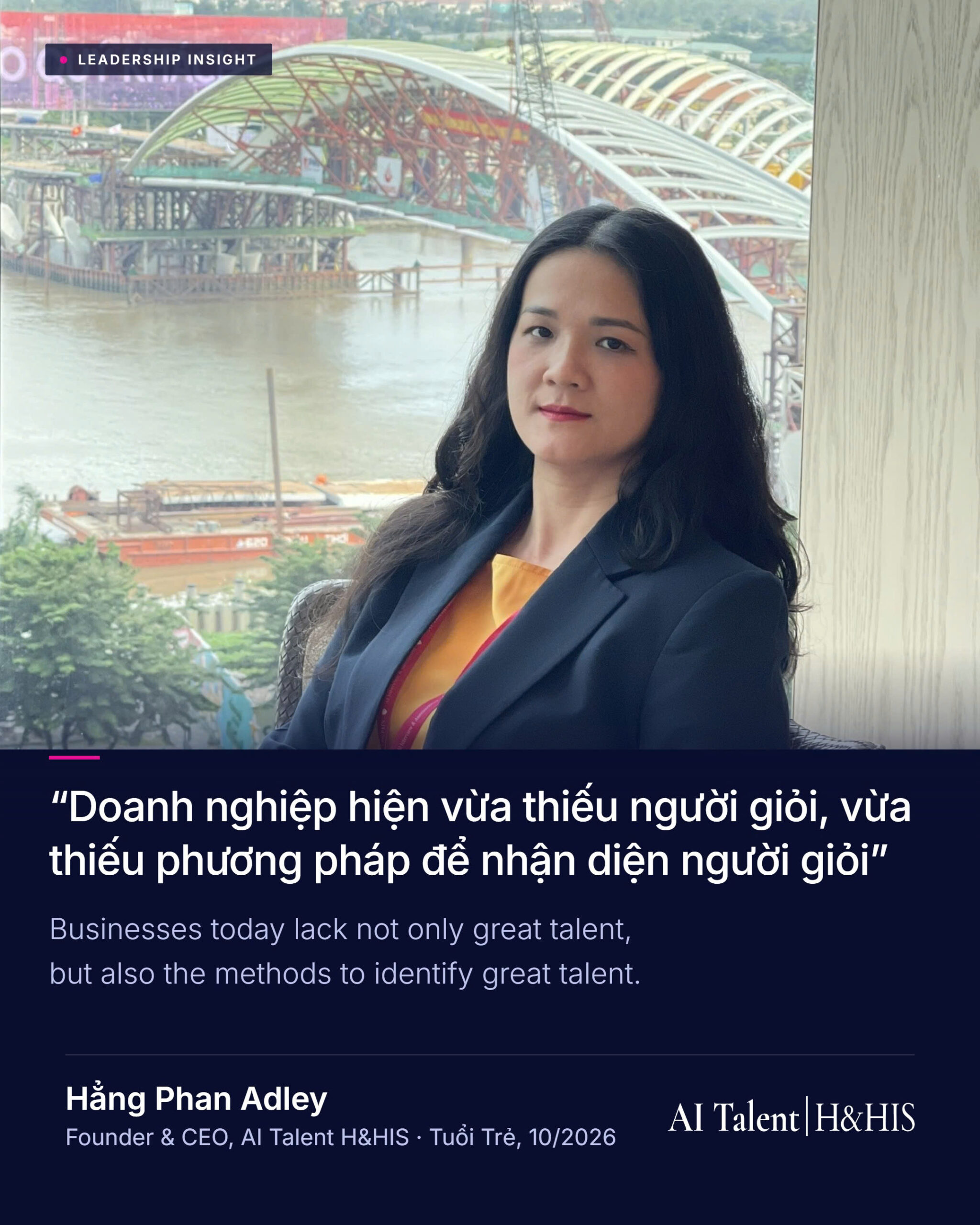
In her previous video, Ms. Hẳng Phan Adley, Founder & CEO of AI Talent H&HIS, explained that when culture and behavior are out of alignment, an organization collapses from within. In this video, she poses a question that spans generations: without a pipeline of successors, where will the organization go? For many businesses, the biggest challenge is not hiring talent but having no one ready to step in. (Based on the talk by Founder & CEO Hẳng Phan Adley on April 8, 2026 – Watch the video)
The Succession Challenge Facing Vietnamese Family Businesses
Most Vietnamese companies began as family businesses. The founding generation is now at an age where succession can no longer wait, and most of the next generation has been formally trained at home or abroad.
Yet there is a reality few are willing to sit down and confront openly. Many companies have run for years on past convenience rather than discipline, without a standardized management system. This leaves successors in a difficult position:
– If they run the business the old way: they don’t know where to start, because there is no clear system to anchor to and follow.
– If they apply the management models they learned in the West: the organization is prone to fracture, because those models do not yet fit how the current team actually operates.
At that point, succession is no longer just a change of people. It becomes a clash between two ways of running the business. The root cause does not lie with any individual. It lies in the organization lacking a clear competency framework for assessment and transition.
Four Common Succession Failure Scenarios
From observing and working with many businesses, the AI Talent H&HIS team has identified four common scenarios:
– First, strategic drift: A travel company serving senior travelers built its reputation on stable service, attentive customer care and safe experiences. After the handover, the successor, more dynamic and drawn to new experiences, began developing adventure travel products aimed at younger customers. But the company had no competitive advantage in that segment, while its core senior segment no longer received adequate investment and priority. The company gradually lost its traditional customers, could not compete in the new market, and was left without a clear identity in the market.
– Second, operational conflict: At a manufacturing company, the successor had formal training and a solid grounding in modern management. However, the business model they introduced did not fit market realities and created conflict within the distribution system. Sales channels overlapped, operations became unstable, and business performance declined steadily.
– Third, cultural incompatibility: Many families send their children to study abroad, where they are exposed to new ways of thinking. When they return to take over, they are unfamiliar with the company’s traditional ways of operating, and the organization has no mechanism for managing change in a controlled way. The result is internal conflict, failed change initiatives, and a rift between the two generations.
– Fourth, not everyone wants to be a successor: Some companies hand over to the next generation, but the successor lacks genuine passion, motivation or long-term commitment to the family business. Once inside, they make inconsistent decisions and lack the commitment to lead the team. Over time, the organization loses its direction.
The Root Cause: No Competency Standards for Assessment and Transition
What these four scenarios have in common has nothing to do with people. The founding generation was not wrong, and the next generation is not lacking in ability. The problem is that the organization has no competency standards for assessment and transition. As a result:
– Founders cannot let go.
– Successors do not know what they are missing or what they need.
– The organization runs on intuition.
– When the business wants to grow further, no one has the capability to take it there.
A Common Mistake: Appointing Based on Performance, Tenure and Relationships
According to leadership development models widely used by leading global experts, each leadership level requires different skills, time applications and work values. (Based on the Leadership Pipeline model by Ram Charan, Stephen Drotter and James Noel.)
In practice in Vietnam, a common mistake is to promote people based on past performance without assessing their capability for the new role. Someone may excel in their previous position yet fail in the new one, or leave behind a leadership gap that destabilizes the organization.
Many companies still choose successors based on experience, seniority, relationships or personal judgment, without answering the most important question: is this person capable of succeeding in the next role?
Companies are not short of people. What they lack is the ability to assess them systematically. This is the invisible capability gap in succession planning.
The Role of AI in Succession Planning
As discussed in previous videos, AI does not replace people. It helps organizations assess and accurately understand human capability. In succession planning, AI can help businesses:
– Analyze how a person thinks and makes decisions.
– Assess how they solve problems across different contexts, especially complex ones.
– Validate capability through controlled scenarios.
– Identify the gap between current capability and the requirements of the next role.
This allows organizations to move from intuition-based judgment to assessment grounded in measurable capability.
A Platform for Building a Genuine Succession System
The AI Talent H&HIS intelligent interview platform goes beyond assessment. It partners with businesses to build a succession system by:
– Defining competency standards for each level.
– Accurately assessing team capability.
– Identifying high-potential successors.
– Designing clear development pathways.
– Linking capability to performance and the leadership succession system.
Building competency frameworks and assessment systems to international standards used to require significant cost and time. Today, with AI, organizations can implement faster, adopt international management principles more easily, and do so far more cost-effectively. Capability development is no longer the privilege of large corporations.
Conclusion
Companies rarely fail for lack of successors. They fail for lack of a system to assess and develop them. In the Vietnamese context, the question is not just who will take over, but who has the capability to lead the organization in an entirely new environment.
The future of a business does not depend on which generation leads it, but on whether the organization has a system good enough to understand, measure and develop human capability.
Is your organization ready for its next generation of leaders? Contact the AI Talent H&HIS team for advice on building a competency framework and succession system tailored to your business.
Watch the full talk: AI Talent H&HIS: Applying Competency Standards to Successor Development – YouTube
AI Talent H&HIS – Hire Smarter. Grow Faster.
Explore now: https://aitalenthhis.com
Hotline: (+84) 97 360 7502
📩 Sign up for a free trial today and start optimizing your hiring process with AI.
For expert consultation, contact: bd@hinternationalstrategy.com
AI Talent H&HIS, the leading AI-powered interview and skills assessment platform in Vietnam and Southeast Asia.
”H&HIS – The minds behind the innovation of AI Talent H&HIS“